
Khuong Ha Communal House
Introduction
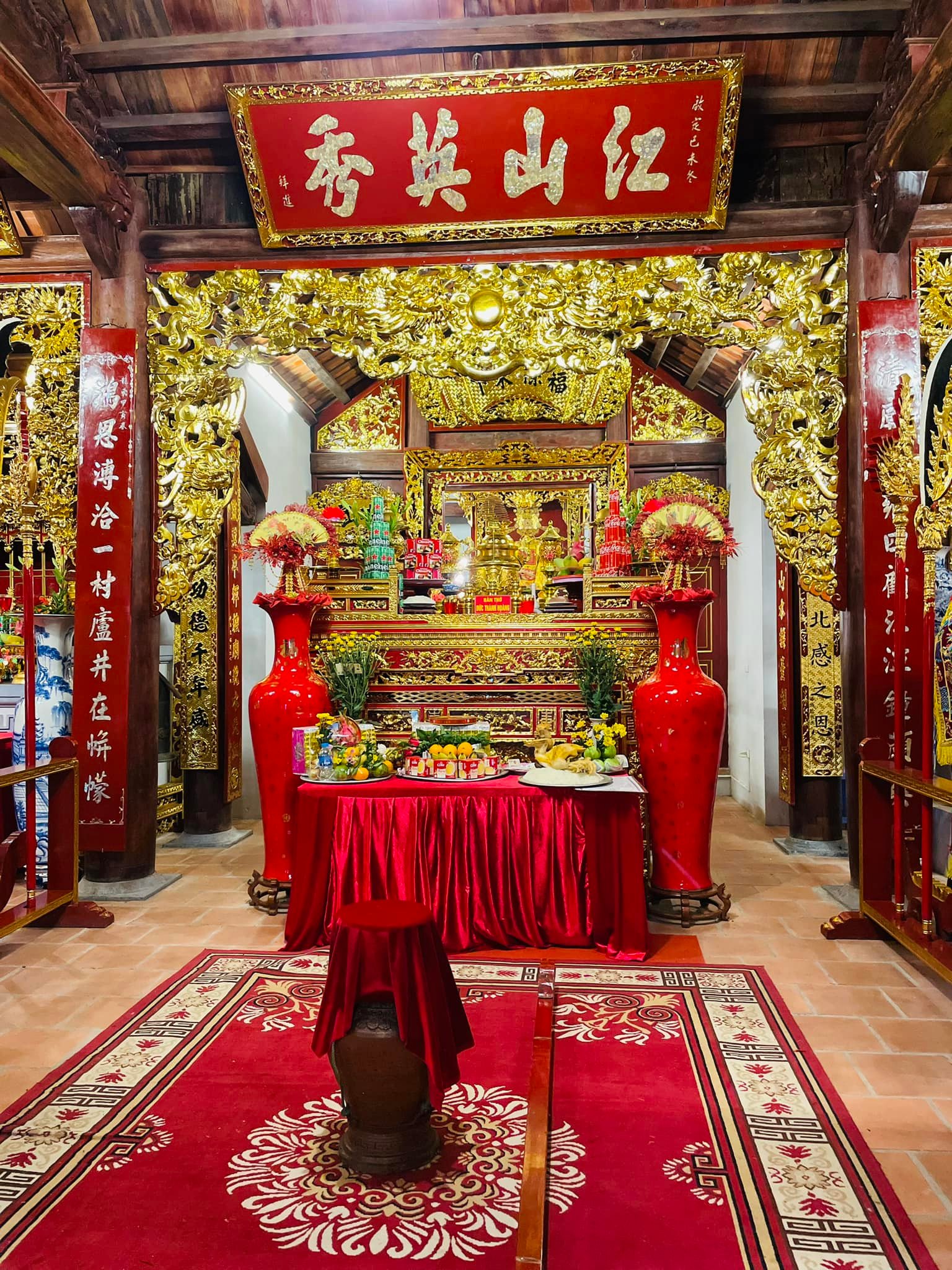
KHUONG HA COMMUNAL HOUSE
Khuong Ha Communal House (colloquially called Gung Communal House) is a historical and cultural relic that was ranked as an architectural and artistic relic in 1993 by the Ministry of Culture and Information (now the Ministry of Culture, Sports and Tourism). It was once used by Quang Trung's troops to store weapons to drive out the Thanh army.
According to the earliest royal edict at the communal house, bearing the reign title Duc Long 5 (1633), Khuong Ha Communal House was built quite early, at least existing since the 17th century. Before 1945, it belonged to Khuong Ha village, Khuong Dinh commune, Thanh Tri district, old Ha Dong province; today it belongs to Khuong Dinh Ward, Hanoi.
Khuong Ha Communal House worships the village's tutelary deity Le Duong Ve, a famous general who lived at the end of the Early Le dynasty and had many meritorious deeds. When the Mac dynasty usurped the Le throne in 1527, he led troops to support the Le and resist the Mac. According to the Dai Viet Su Ky Toan Thu, Le Duong Ve led troops against the powerful minister Mac Dang Dung but failed; at one point he had to take King Le Chieu Tong to hide at Vong Communal House. In 1526, Mac Dang Dung imprisoned the king in Dong Ha ward and secretly ordered Bai Khe ba Pham Kim Bang to kill Le Chieu Tong, bury him at Vinh Hung mausoleum, and the following year forced Le Cung Hoang to abdicate.
Khuong Ha Communal House has an imposing, spacious architecture, and its unique carved panels remain intact, increasing the relic's ancient value. Overall, from outside in, Khuong Ha Communal House was built along a central axis facing southeast; the main gate opens onto the village road, now Khuong Ha Street. The architectural system of Khuong Ha Communal House includes several layers: Nghi Mon, communal courtyard, left and right corridors, front hall, great hall, and rear sanctuary.
The Nghi Mon consists of four pillars; on each main column are four phoenixes with joined tails, and on the two side gates are pairs of nghê facing inward. From the main gate, there are a pair of standing elephants carved from blue stone, almost as large as real elephants. Beyond the gate is a spacious communal courtyard paved with red bricks. In front of the communal house door are two lamp posts and two large stone nghê, made in the early 20th century.
Two buildings parallel to each other on either side of the communal courtyard are the left and right corridors, each with three bays, simply built and roofed with local tiles. The left and right corridors are where offerings to the tutelary deity are arranged and where villagers rest during festivals; they are also places for receiving guests and placing palanquins. On both sides, ancient banyan trees provide shade.
Khuong Ha Communal House relic mainly bears the architectural and artistic style of the late Nguyen period. The great communal hall is the most monumental structure in the overall architecture of the relic. The great hall is placed on a high earthen platform and is linked in a continuous style with a five-bay, two-wing front hall, roofed with local tiles, topped with a pair of dragons facing the sun. The great hall is seven bays wide and connects to the rear sanctuary in a pestle-shaped plan. The rear sanctuary is the most solemn part, the main worship place of the communal house, expressing the most sacred character in the relic's overall architecture. The rear sanctuary also has many carved panels with the four sacred creatures motif on the y mon, curtains, incense table, and worship canopy, strongly bearing the wood-carving art of the late Nguyen period. At the front eave of the front hall are relief statues of the two Dharma Protectors, Thien and Ac, standing facing each other.
The back of the communal house borders a square rear courtyard of fairly large area, paved with bricks and with many ancient trees, creating an ancient and sacred cultural space. Along the courtyard is a rectangular pond with an area of about 1,000 m2.
The communal house still preserves many precious artifacts strongly bearing the wood-carving art of the late Nguyen period
Existing to this day, in addition to architectural works, Khuong Ha Communal House also preserves many architectural components, artifacts, and statues in the Late Le and Nguyen styles. Notably, within the communal house grounds there are three classrooms and a stele of Khuong Ha School erected in the 8th year of Bao Dai (1933). The communal house also preserves many precious artifacts, including: six stone steles on the wall of the left corridor, a wooden incense table carved with dragons, tiger symbols, and clouds, a dragon throne, ancestral tablet, a worship niche, two great horizontal plaques, and twenty-one royal edicts dating from the 5th year of Duc Long (1633) to the 9th year of Khai Dinh (1924).
Along with the vicissitudes of history, Khuong Ha Communal House has undergone many restorations, repairs, and expansions. Today, the communal house has a beautiful location and scenery; it is a place for the elderly and children to play and exercise, and a place for everyone to relax after stressful working hours.
The Khuong Ha village communal house festival is solemnly held annually on the 12th day of the 2nd lunar month, featuring distinctive performances such as the horse-running ceremony, dragon dance, lion dance, human chess, wrestling, cheo singing, etc.
The traditional festival of Khuong Ha Communal House is an annual cultural and spiritual activity of the government and people of Khuong Dinh Ward, aiming to promote the tradition of remembering the source when drinking water, awaken national pride, and not only practically serve the people's need to enjoy traditional cultural values in the ward in general but also strongly reflect the nation's traditional customs and practices.



