
Khuyen Luong Communal House
5.0Free
5.0Free
Introduction
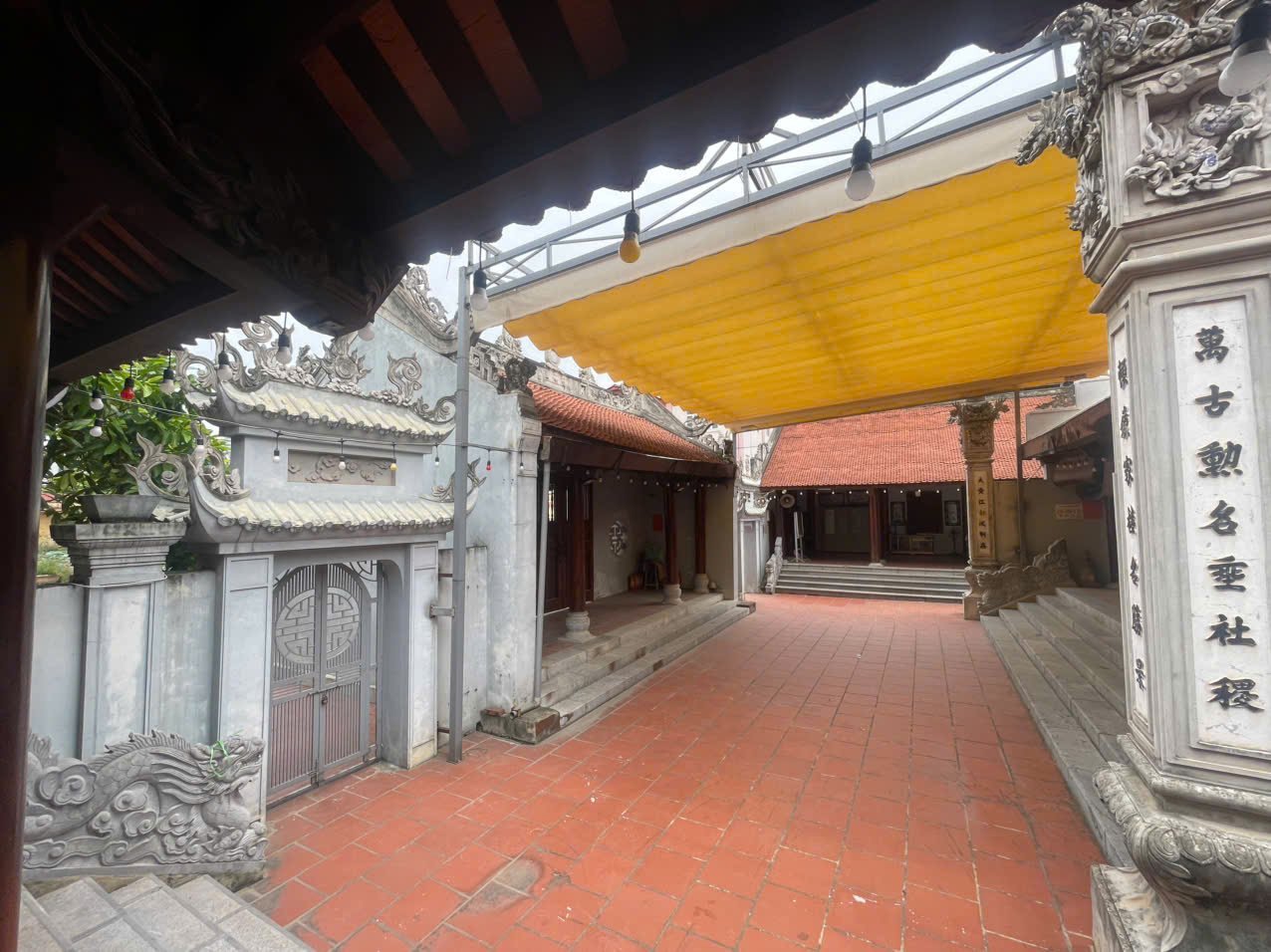
Khuyen Luong is a very famous ancient village in the southeast of the Thang Long capital. At the end of the Tran dynasty, Khuyen Luong was part of the fief of the notable official Tran Khat Chan, a major historical figure of the Tran dynasty, who had the merit of crushing the Champa army and killing King Che Bong Nga when he invaded our country's borders. The beauty of the land where Grand General Tran Khat Chan chose to build his manor and fief was praised by Nguyen Trai: In that region, the soil was red and ripe together with blue-black hues, the fields were of the top grade, and moreover the Kim Nguu River, like a silk ribbon crossing it, was a gift of nature to this region.
In 1399, General Tran Khat Chan was killed after his plan to kill Ho Quy Ly failed, and the fief was also destroyed and perished. Although the loyal official Tran Khat Chan was associated with this land for only a short time, his merits and career left a deep mark on the cultural life of the local people. To show admiration and gratitude to him, the villages in the former fief area, including Khuyen Luong village, all worship Tran Khat Chan as the village guardian deity protecting community life.
Located in a countryside rich in historical tradition, the Khuyen Luong Communal House relic has a long history of existence over time. The communal house has undergone many restorations and repairs. During his lifetime, Tran Khat Chan built the manor and fief in this area. In the manor planning, Khuyen Luong was planned as a mulberry-growing and silkworm-raising area, a traditional craft that remained attached to the villagers for a long time afterward. The image and career of the Tran-dynasty famous general are always deeply imprinted in the memories and spiritual life of generations of Khuyen Luong villagers.
In June 1945, two classes teaching Quoc Ngu were established at Khuyen Luong Communal House. On August 19, 1945, the Viet Minh seized power in Hanoi; these two classes were a core factor in overthrowing the old administration, establishing the new people's administration, and setting up the Self-Defense Force, Youth Union, and Women's Association to participate in fighting to protect the government.
By June 1946, the first training class for cadres of the Vietnam Trade Union was opened at the communal house. In 1947, the people of Khuyen Luong village built a base in the enemy-occupied area; the communal house was a place to mobilize the people to buy resistance bonds and to mobilize the people to hide cadres, soldiers, and guerrillas.
From 1948 to 1949, the revolutionary movement was very strong, the enemy constantly terrorized and robbed the people, and the enemy brought French troops to set up a post at Khuyen Luong Church to suppress the revolutionary movement here. At the communal house gate on October 21, 1949, they shot dead Comrade Nguyen Van Khang, a guerrilla fighter. By June 1950, they set up a post right at the village entrance, encircling and searching to sabotage the local revolutionary movement. Nevertheless, the people remained united in fighting, protecting cadres and protecting their homeland.
In 1961, doing well in livestock raising and becoming the leading flag of the capital's agricultural movement, the people of Khuyen Luong had the honor of welcoming Uncle Ho, Prime Minister Pham Van Dong, Prince Souphanouvong, and Uncle Ton Duc Thang on their visit.
In 1964, when the US escalated its attacks on the North, Khuyen Luong Communal House was a place for storing military supplies (pots, pans, dry food, and medicines) for combat. In particular, the communal house was a place for storing anti-aircraft artillery shells for two artillery positions and one missile position to protect the Red River ferry bridge.
Khuyen Luong Communal House was ranked as a historical and architectural-artistic relic by the Ministry of Culture and Information in 1996.



