
La Communal House
Introduction
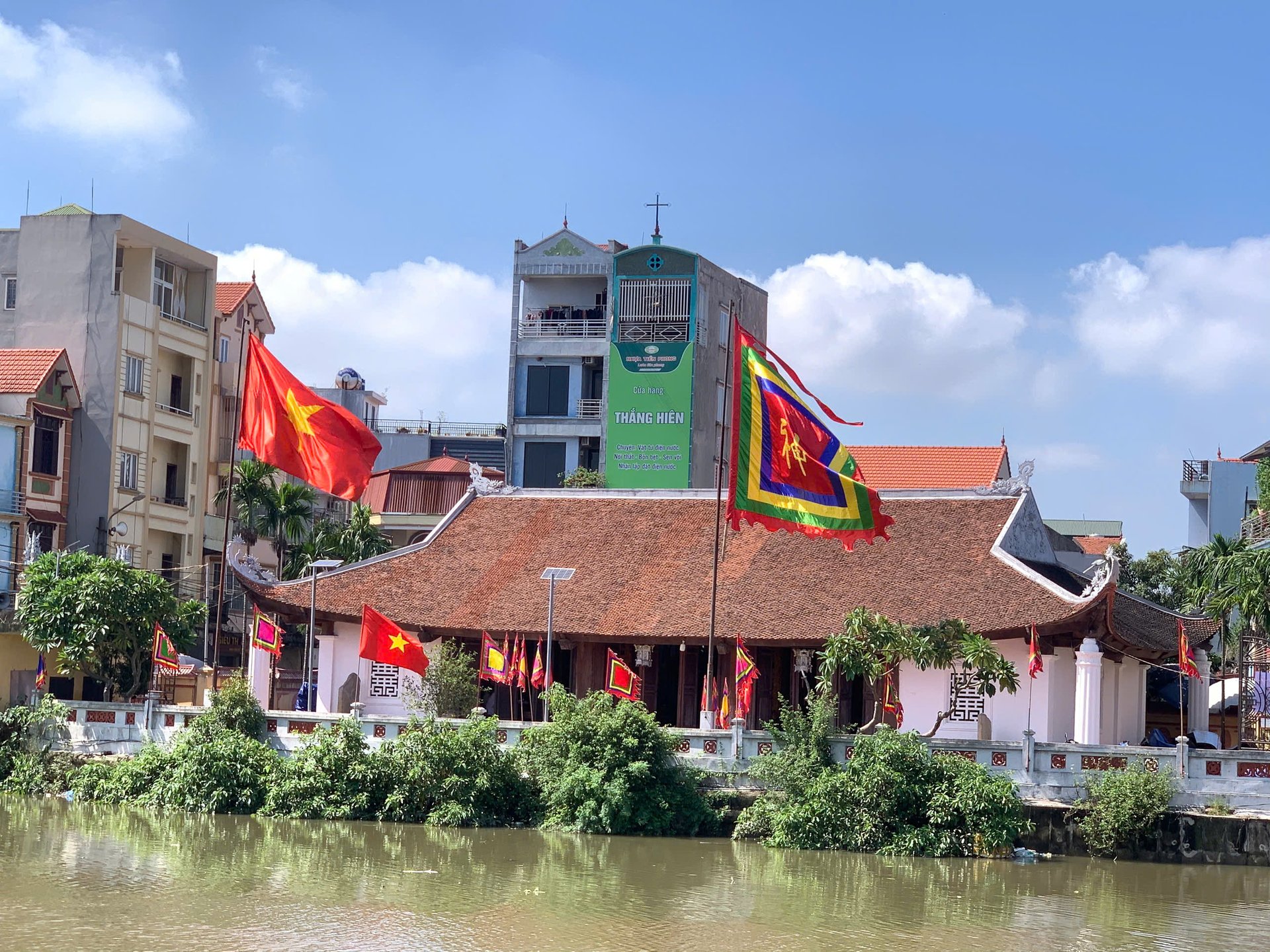
La Communal House is the communal house shared by four villages—La Uyen, Phuc Trai, Tho Ngai, and Mai Sao—in La Phu canton, formerly Thuong Phuc district, now Thuong Phuc commune, Hanoi City. Built during the Le–Mac period, La Communal House is one of the early ancient architectural works, bearing outstanding historical, cultural, and artistic value of the Red River Delta region.
According to surviving documents, the communal house was built in the fourth year of Dien Thanh (1581) and underwent several renovations under the Le Trung Hung and Nguyen dynasties, but it has basically retained its traditional scale and architectural style. The main hall consists of three bays and two wings, with a wide stone-edged foundation, a system of large wooden columns, and a frame connected in the style of upper stacked trusses with second beams, lower flank trusses, and eave brackets. The rear sanctuary was built in 1936, later destroyed in war, and rebuilt by local people after national peace.
La Communal House worships three Great Kings: Minh Lang Dai Vuong, An Lang Dai Vuong, and Xa Than Dai Vuong. Among them, Minh Lang Dai Vuong is identified as Nguyen Phuc, a former official of the Le dynasty who rendered meritorious service to the people and the country.
Outstanding in the communal house’s artistic value is the distinctive woodcarving system on the dau du, dau, bay hien, con, and van gio. Dragon images are vividly depicted in the openwork and raised-relief carving style characteristic of the 16th century.
The communal house still preserves many edicts, genealogies, thrones, tablets, palanquins, horizontal inscriptions, couplets, and ritual objects. In particular, the stele erected at La Uyen bridge in the 10th year of Sung Khang (1575) is a valuable document contributing to research on the history, culture, and social life of the former Son Nam region. In 2003, La Communal House was recognized as a national-level historical and architectural-artistic relic.



