
Nguyen Khe Communal House
Story
01Nguyen Khe Communal House
Nguyen Khe Communal House is located in Nguyen Khe Hamlet, Phuc Thinh Commune, Hanoi City.
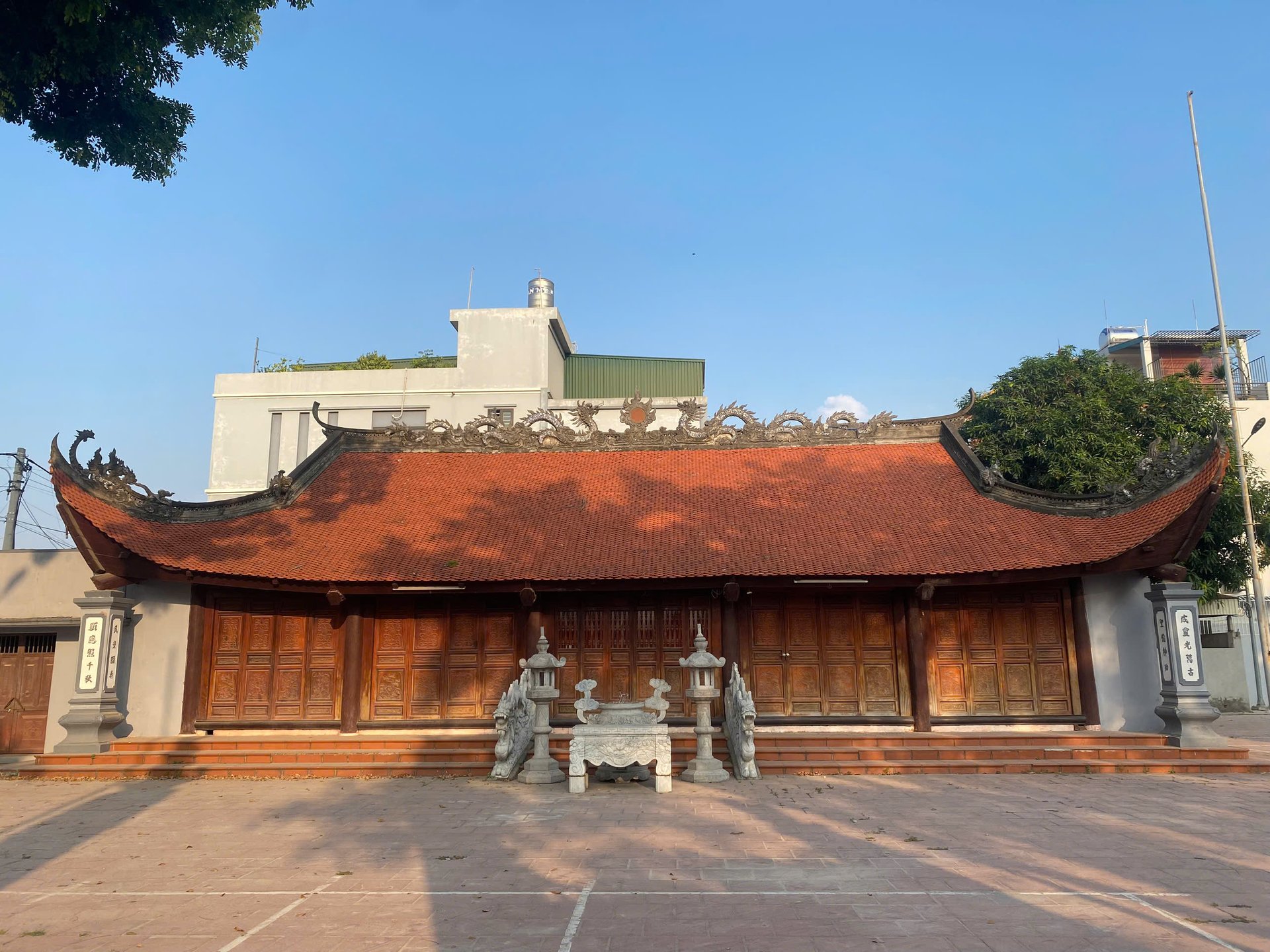
Nguyen Khe Communal House is an ancient communal house built long ago; it is a cultural and religious work with a long history and a tradition of national construction and defense. Currently, the relic no longer preserves accurate written documents about the year of its founding. However, based on the architecture and remaining artifacts such as deity legends, parallel sentences, horizontal plaques, and the date line engraved on a stone stele bearing the Canh Hung era (1740-1786), it can be concluded that the communal house was built around the Later Le period, at the end of the 18th century. According to local folk legend, the communal house dates from the Ly dynasty and once kept many royal edicts, but these edicts no longer exist.
According to the accounts of elders, the former communal house was grand in scale, consisting of five bays with two side wings, built of lim wood with a system of large columns. The communal house is located on a high, wide plot in the center of the village; in front is the communal pond, and behind is the quan pond. Around the communal house are other cultural and religious works such as a pagoda, temple, and van chi, forming a complex of traditional cultural space characteristic of Vietnamese villages in the Northern Delta.
During the resistance war against the French, Nguyen Khe Communal House was associated with important historical events of the locality. In 1945, during the August Revolution movement, the communal house was where local people gathered with workers of Dong Anh Railway Factory to hold a rally and march, participate in seizing power, and confiscate the seal of the district mandarin. At the end of 1947, during a French sweep, the village's communal house and temple were burned and destroyed, causing many architectural traces and historical documents to be lost. The devastation of war left deep sorrow in the hearts of the people, and also urged generations of descendants to restore the place of worship, preserve tradition, and remember the merits of their ancestors.
02Architecture
The current Nguyen Khe Communal House is built on ancient ground, with an area of about 200 m², facing west toward National Highway 3, the traffic route connecting Hanoi with Thai Nguyen. The communal house has a “Dinh”-shaped architectural structure, including the main items: nghi mon (ceremonial gate), dai dinh (main hall), and hau cung (rear sanctuary). The surrounding space has trees, creating a relatively open and solemn landscape suitable for the function of a traditional religious work. Although it has undergone many changes and been restored and repaired over different periods, the communal house still retains a strong traditional architectural style. Decorative details preserved on wooden components such as dau bay, dau ke, and cau dau reflect the crafting techniques and old artistic aesthetic concepts.
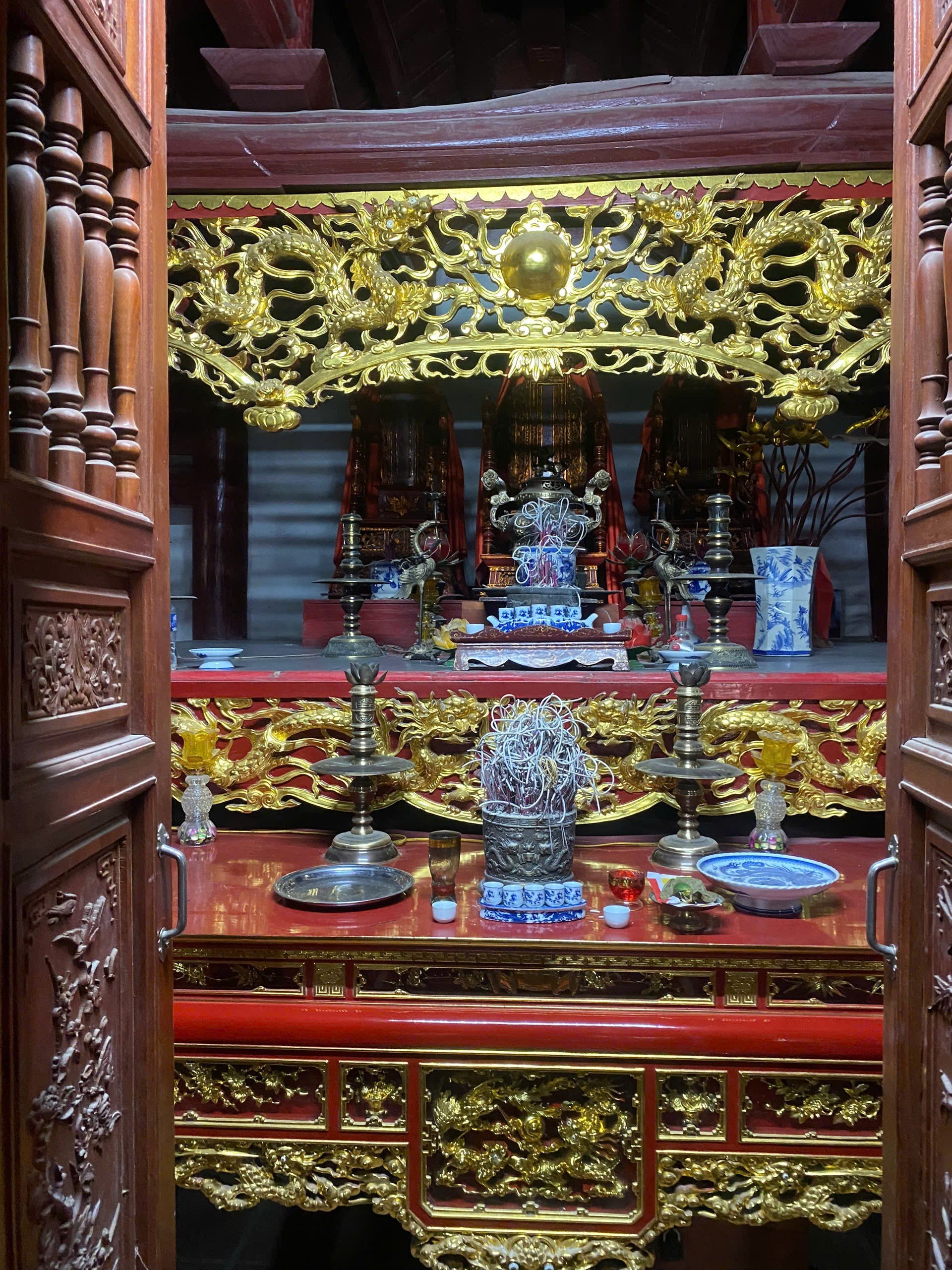
In particular, the communal house still preserves a relatively rich system of artifacts in terms of types, including long ngai (thrones), tablets, stone steles, worship cranes, horizontal plaques, parallel sentences, and carved worship objects. Some artifacts are intricately carved with traditional decorative themes such as the four sacred creatures Dragon - Ly - Turtle - Phoenix, the four seasons, two dragons adoring the moon, and Long Van Khanh Hoi... These images reflect the people's wishes, praying for favorable rain and wind, bumper crops, and prosperity of people and goods.
03Religious belief
Nguyen Khe Communal House is the place of worship for four tutelary deities: Cao Son Dai Vuong, Hong Cong, Gan Cong (Tam Giang - Duong Giang Dai Vuong), and Nha Lang Linh Ung Dai Vuong. Among them, Nha Lang is honored as the village's Thanh Hoang (tutelary god). According to legend, he once took Hoan Khe Trang, now Nguyen Khe, as a base for training troops and establishing merits in the conflict between the Ly and Trieu clans. After his death, the people built a temple to worship him, and King Le Dai Hanh bestowed the title “Nha Lang Linh Ung Dai Vuong”. The deities are respected and worshipped by the people with belief in their protection and blessing for the village, praying for a peaceful life, a settled people, and a developing homeland. The worship of the deities expresses a long-standing folk belief and also reflects the community's gratitude to the deities believed to have protected the villagers.
04Festival
The traditional festival of Nguyen Khe village communal house is a cultural and religious activity that holds an important position in community life. The festival not only expresses the people's reverence for the village's Thanh Hoang but is also an occasion to remember ancestors, review the history of the homeland, maintain traditional customs, and strengthen bonds between generations. Previously, each year the village communal house usually held two festival seasons on the birth and death days of the Thanh Hoang. Currently, according to village custom, the traditional festival is held every three years on the 7th day of the first lunar month.
The festival usually takes place over three days with traditional rituals and cultural activities. Among them, the ritual of carrying the Thanh Hoang's palanquin from the temple to the communal house and the ceremonies are important contents, expressing the community's reverence for the worshipped deity. The rituals are organized solemnly, contributing to preserving the customs, practices, and cultural and religious space of the village. The village festival is also an occasion for children studying, working, and doing business far away to turn toward their homeland and agree on a date to return for reunion. Coming to the village festival, you will also learn more about the traditional history of the locality and live in an atmosphere full of warm affection.
Through the ups and downs of history, Nguyen Khe Communal House still holds an important position in the cultural and spiritual life of local people. The relic is a place preserving historical marks, architectural and artistic values, folk beliefs, and the revolutionary tradition of the homeland. Every person, especially the younger generation, should actively learn about the history of the homeland, practice a civilized lifestyle, protect the landscape and artifacts at the relic, and join hands to preserve the heritage for future generations.
Nguyen Khe Communal House was ranked as an “Artistic Historical Relic” under Decision No. 4814-QĐ/UB dated November 30, 2007.
More Other places
- Other placesVerified
Gioi Duc Pagoda (Hong An Temple)
Ung Hoa Commune
5.0Free  Other placesVerified
Hai Giac Pagoda
O Dien Commune
5.0Free Other placesVerified
Phuong Bang Pagoda (Hung Long)
Son Dong Commune
5.0Free Other placesVerified
Sung An Pagoda, also known as Sung Khang Pagoda (Dong Ba Pagoda)
Thượng Cát Ward
5.0Free
