
NHI CHAU COMMUNAL HOUSE
Good to know
- You should arrive early for an open and airy experience
- Free
- Convenient access by taxi or bus.
Introduction
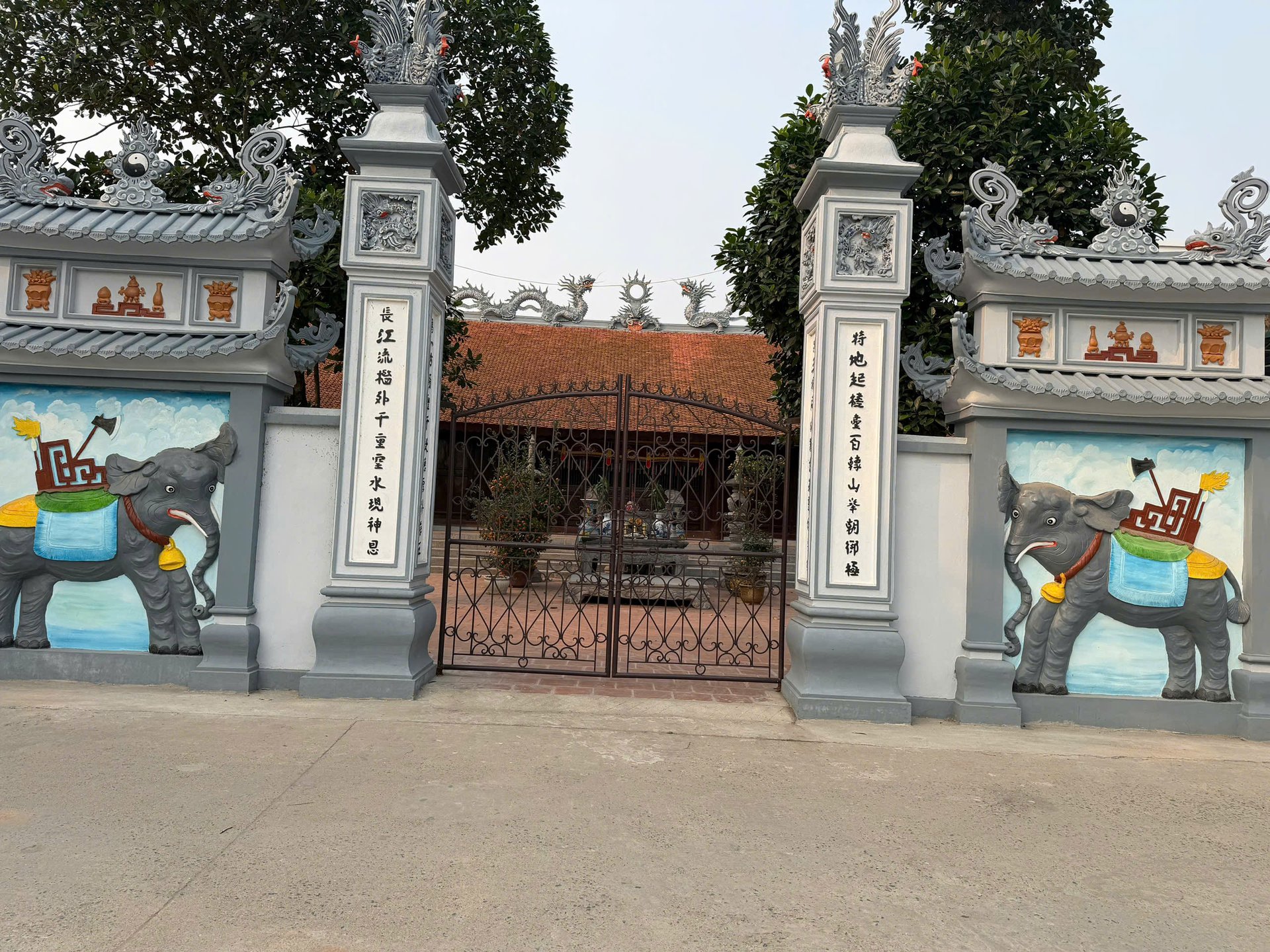
Nhi Chau Communal House is a national-level architectural and artistic relic, ranked by the Ministry of Culture and Information in 1995. The communal house is located in the south of Nhi Chau village, on a high plot facing southwest, with the To Lich River and wide fields in front, creating an ancient space harmonious with the natural landscape. Under the Ly–Tran dynasties, this land was named Minh Khanh, so the communal house was also called Minh Khanh Temple.
The communal house is quite large with all traditional components such as a screen, ceremonial gate, communal yard, two rows of Left and Right auxiliary houses, the Great Hall, the tube-shaped passage, the Rear Sanctuary, along with a system of front and rear yards and auxiliary works serving the community's cultural and religious activities.
The relic worships the three Great Kings: Nhat Quang, Nhat Chieu, and Nhat Tuan – generals who helped the Ly king fight invaders and protect the country. In addition, the communal house also worships the Later Deities, who contributed to building and repairing the communal house through various periods.
Nhi Chau Communal House has a long history, associated with legends from the Ly dynasty (11th century). The current structure was built around the second half of the 17th century and underwent many restorations in the 18th and 19th centuries and in 1911, 1988, and 2010–2011. The communal house stands out for its architectural art and exquisite wood carvings in the late Nguyen style, expressed through themes of dragons, phoenixes, the four sacred creatures, and the four precious plants. The communal house currently preserves many valuable relics such as sacred genealogies, stone steles, horizontal panels, couplets, and ancient worship objects, contributing to reflecting the local historical, cultural, and traditional religious values.
More Other places
- Other placesVerified
Gioi Duc Pagoda (Hong An Temple)
Ung Hoa Commune
5.0Free  Other placesVerified
Hai Giac Pagoda
O Dien Commune
5.0Free Other placesVerified
Phuong Bang Pagoda (Hung Long)
Son Dong Commune
5.0Free Other placesVerified
Sung An Pagoda, also known as Sung Khang Pagoda (Dong Ba Pagoda)
Thượng Cát Ward
5.0Free
