
Thanh Loi Communal House, Thanh Binh Village, Hong Son Commune, Hanoi City
5.0Free
5.0Free
Introduction
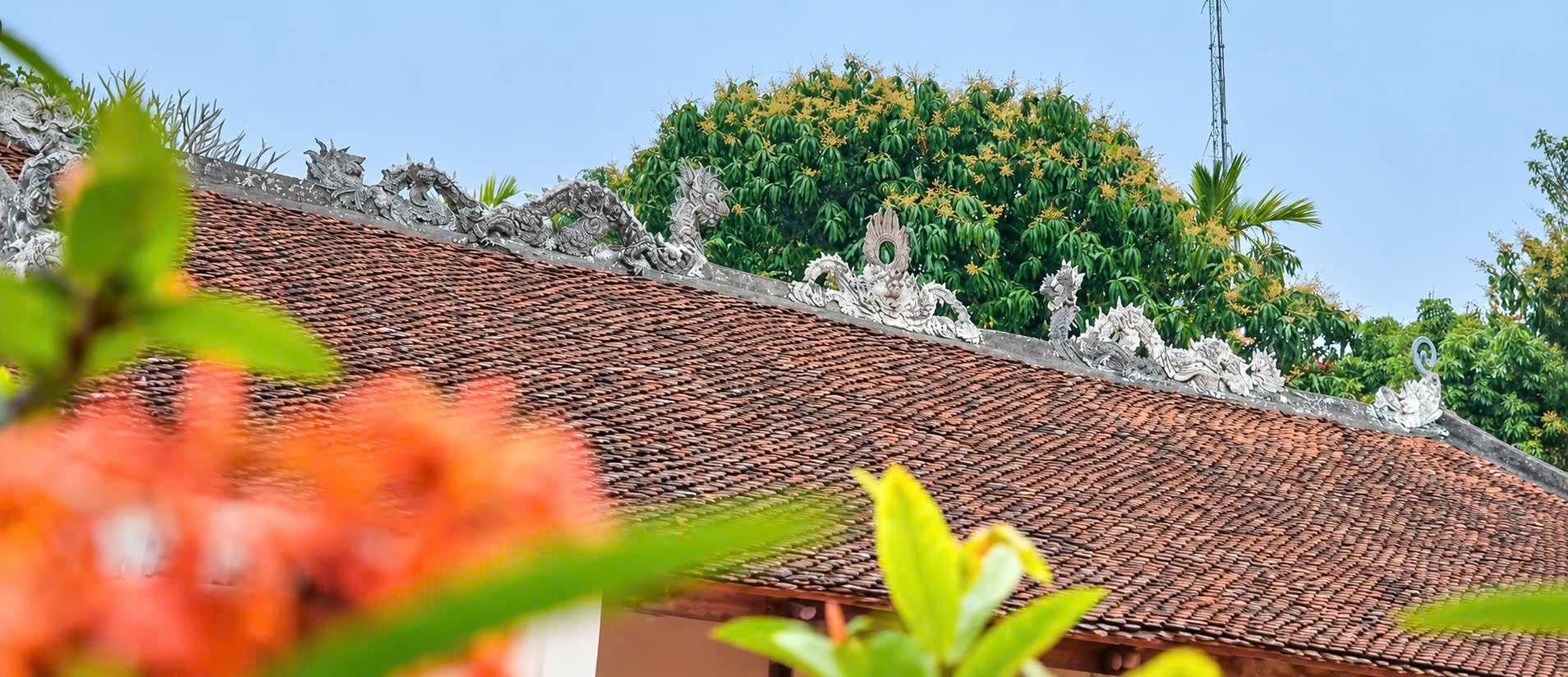
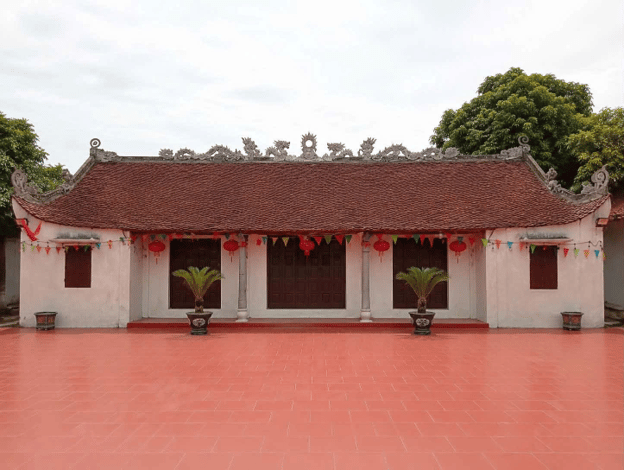
Thanh Loi Communal House worships the village tutelary god, Quynh Phuong Cong Chua Le Thi Ngoc Hanh Cu Truong Dai Vuong, often respectfully called Lady Le by local people; it also jointly worships Quynh Phuong Princess Le Thi Ngoc Quynh and Dung Hoa Princess Le Thi Ngoc Trang. The worship of female deities who contributed to the people and the village expresses the tradition of gratitude, the moral principle of remembering the source when drinking water, and the deep spiritual belief of agricultural residents in the Northern Delta.
With outstanding historical, cultural, architectural, artistic, and religious values, Thanh Loi Communal House was ranked as a City-level Historical Relic by the Hanoi City People's Committee under Decision No. 6162/QD-UBND dated November 28, 2024. This is an important recognition of the relic's values and also sets the requirement to continue protecting, preserving, and promoting the heritage in contemporary life.
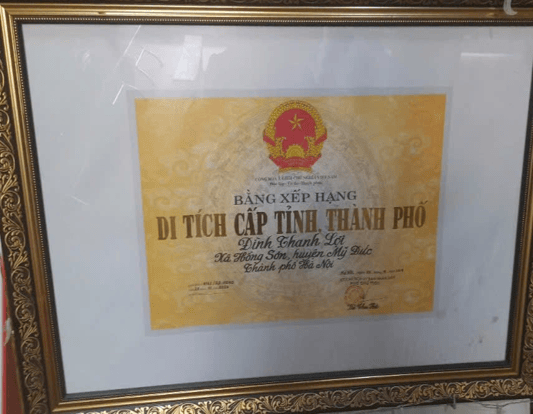
1. Location, formation history, and development process
The relic is located in Thanh Loi Village, Hong Son Commune, Hanoi City. According to available documents, the exact year of the communal house's initial construction has not been determined; however, the architectural system and surviving artifacts show that the communal house bears strong artistic imprints of the Nguyen dynasty, spanning from the Tu Duc reign to the Bao Dai reign.
The presence of horizontal lacquered boards, parallel sentences, scrolls, wooden palanquins, washing pavilions, stone steles, and royal edicts are important evidence reflecting the long formation, existence, and development of the relic in local community life. Through many historical changes, wars, harsh weather, and changes in social life, Thanh Loi Communal House has still preserved many valuable original elements.
In particular, the architectural frame with intricately carved wooden components and the four main columns of the central bay made of blue stone are evidence of the meticulous investment of predecessors in building and renovating the communal house. This is also a basis for affirming the position of Thanh Loi Communal House in the system of local historical and cultural relics.
Currently, documentation on the relic does not fully state specific restoration milestones for each period. However, through actual conservation and use, it can be seen that the communal house has many times received attention and care from local people and authorities, with repairs and landscape improvements to preserve the worship space, protect artifacts, and serve cultural and religious activities. The communal house yard is paved with bricks, and the grounds include ornamental plants and commemorative trees, creating a solemn and cool landscape; auxiliary items have also been arranged to better meet the requirements of protecting and promoting the relic's values.
2. Characteristic architecture of the relic
Overall, Thanh Loi Communal House includes main items such as the communal house gate, the Dai Bai hall, the Hau Cung sanctuary, and some auxiliary items within the grounds. The gate is built of bricks with four pillars; the two main pillars have four-sided roofs, decorated with the image of two dragons adoring the sun, creating a solemn appearance and expressing traditional aesthetic concepts in Vietnamese village communal house architecture.
The Dai Bai hall is a prominent item, structured as a three-bay, two-wing horizontal house with four-sided roofs and curved corner supports, covered with tiles. The roof and architectural components are decorated with themes of dragons, unicorns, nghê creatures, leaf patterns, the four sacred animals, and the four precious plants. The central bay's truss system still preserves dragon-carved beam ends in the artistic style of the Nguyen dynasty; the beam ends are joined by tenons passing through the main columns, with the front half carved with a dragon head and the rear half attached to the lower truss carved with a dragon tail. These details show the technical level and refined aesthetic thinking of former artisans.
A unique feature of Thanh Loi Communal House is that the four main columns of the central bay are made of blue stone, strong and durable. This is an uncommon feature in many relics of the same period, contributing to the distinct value of the communal house. The Hau Cung is the most sacred space, where the altar, worship cabinets, statues, and ritual objects are arranged, expressing solemnity in the worship of the village tutelary god. In addition, within the communal house grounds, there is a small shrine behind the left rear corner of the plot; according to elderly residents, it is a place for deities to temporarily reside before entering the communal house.
3. System of artifacts, relics, and documentary value
Thanh Loi Communal House currently preserves many valuable artifacts and relics, including 5 of a total of 13 royal edicts, along with ritual objects and artifacts from the Le and Nguyen dynasties such as horizontal lacquered boards, parallel sentences, scrolls, palanquins, washing pavilions, stone steles, and other worship objects.
This is a valuable source of documentation for researching village history, tutelary god worship, traditional decorative art, and the relationship between the feudal court and folk religious life in the locality. These artifacts not only have historical value but also scientific, aesthetic, and educational value. Each horizontal board, parallel sentence, royal edict, or carved component contributes to telling part of the story of the settlement, labor, village founding, village protection, and cultural life building of generations of Thanh Loi residents.
4. Traditional festival and religious activities
The traditional festival of Thanh Loi Village is held mainly on the 10th day of the 11th lunar month annually, associated with the death anniversary of Princess Le Thi Ngoc Hanh. According to the 1998 Village Cultural Convention, the festival takes place on the 9th and 10th days of the 11th lunar month; a major festival is held once every 3 to 5 years, while annually an incense-offering memorial ceremony is held on site according to traditional rituals.
The festival commemorates three National Mother Supreme Great Deities. According to the declaration of the village chief dated May 7, 1938, Princess Le Thi Ngoc Hanh was a descendant of King Le Hien Tong, became spiritually manifest in the reign of King Le Chieu Thong, and had merits in reclaiming land, establishing hamlets, developing people's livelihoods, protecting the people, helping stabilize agricultural production, and forming good customs and practices for the villagers.
During the festival, the ritual part usually includes incense offering, worship of the tutelary god, processions, and prayers for blessings; the festive part is an occasion for people to exchange, meet, review traditions, and strengthen neighborly bonds. Religious activities at the communal house express the moral principle of remembering the source when drinking water and gratitude to predecessors, while also conveying aspirations for national peace and prosperity, favorable harvests, and a warm and happy life.
5. Cultural-historical value and role in community life
Thanh Loi Communal House is a space that crystallizes many layers of local cultural and historical values. Historically, the communal house reflects the formation of villages, the process of honoring individuals who contributed to the people and the village, and the cohesion of the community through many generations. Culturally, it is a place to preserve customs, rituals, and tutelary god worship, and also a venue for cultural and artistic activities and community gatherings during festivals and traditional village days.
In present-day life, Thanh Loi Communal House continues to serve as a spiritual support for local people. On festivals, lunar first and fifteenth days, or village cultural events, people join together to care for incense and offerings, organize rituals, and improve the landscape, thereby nurturing solidarity, community responsibility, and pride in the homeland. The relic also contributes to educating younger generations about historical traditions, the moral principle of gratitude to predecessors, and awareness of protecting cultural heritage.
6. Significance of the relic in preserving national identity
Thanh Loi Communal House is not only an ancient architectural work but also a symbol of Vietnamese village cultural identity, where religion, festivals, carving art, traditional customs, and community spirit converge. Preserving Thanh Loi Communal House means preserving historical memory, safeguarding cultural roots, and transmitting the good values of ancestors to future generations.
In the current context of urbanization and integration, promoting the relic's values should be linked to building a civilized lifestyle, developing appropriate cultural tourism, and raising public awareness, especially among younger generations, so that the relic continues to live in community life and makes practical contributions to preserving national identity.
From the above values, it can be affirmed that Thanh Loi Communal House is the pride of the people of Thanh Loi Village in particular and Hong Son Commune in general; it is an address for traditional education, nurturing love for the homeland, and awareness of responsibility in protecting and promoting the value of local cultural heritage.



