
Tho Thap Communal House
Introduction
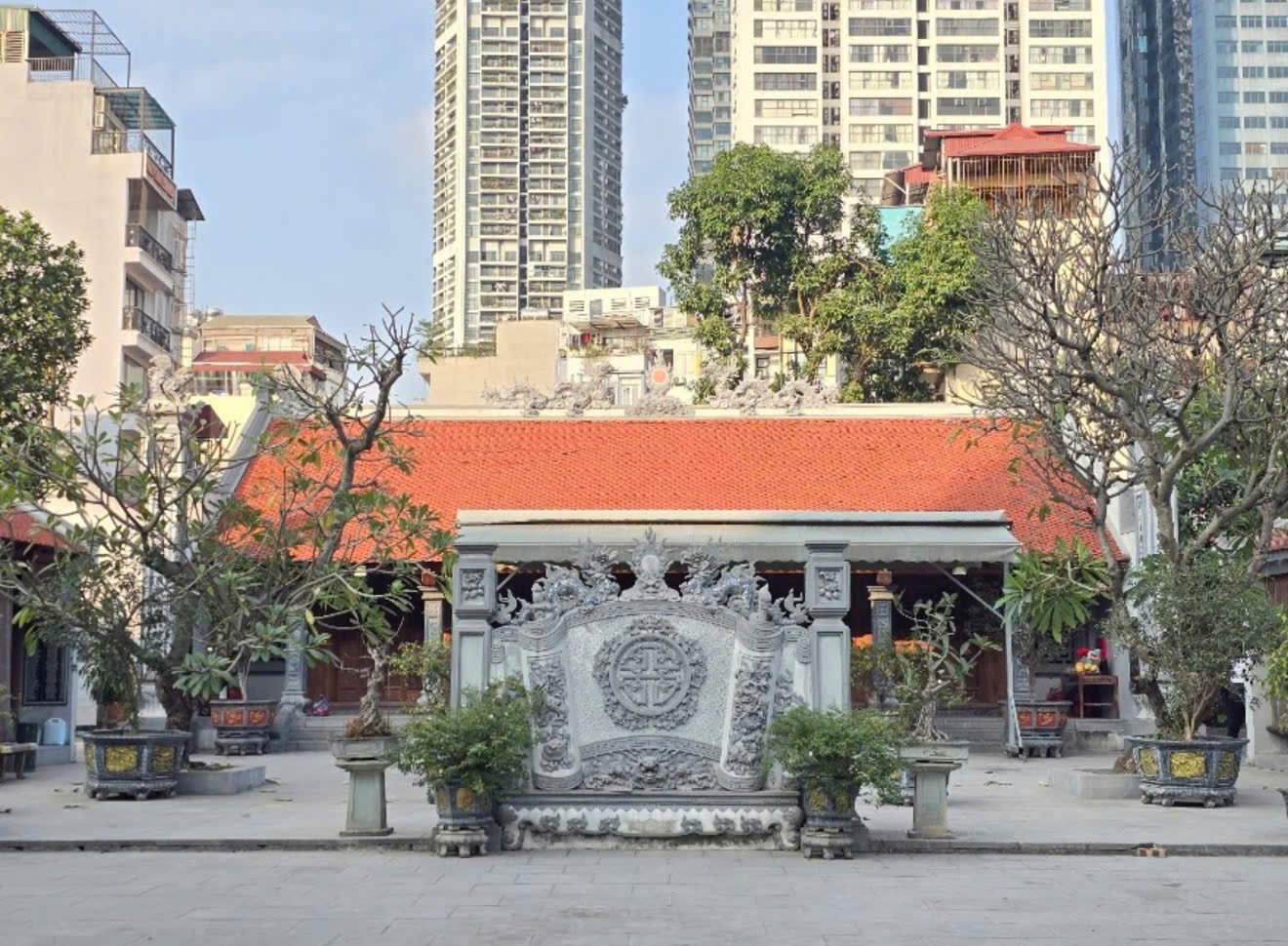
The Tho Thap Communal House was built on an ancient place called “Ke Vong,” a land associated with our nation’s thousand-year process of building and defending the country.
The book “History of the Revolution of Dich Vong Ward,” published by Hanoi Publishing House, writes:
“Ke Vong is a very ancient village; along with archaeological remains, a coffin hollowed out from an entire tree trunk was found beneath the To Lich River, less than 300 m from Dich Vong Ward (in Yen Hoa area), containing ancient human bones dated to the beginning of the Common Era (2,000 years ago)… During the Ly and Le dynasties, this place name was associated with historical stories: in 1063, King Ly Thanh Tong went to Thanh Chua Pagoda. In 1522, King Le Chieu Tong, threatened by Mac Dang Dung, had to retreat to Dich Vong commune. Dich Vong is also famous for its traditional craft villages, such as Tien Hamlet with vegetable growing; Trung Hamlet with flute-making and carefully milled, fragrant, pliant rice favored by city dwellers, hence the saying “Ca Cao, Vong rice”; Hau Hamlet with corn and sweet potato growing, and especially Hau Hamlet also has the trade of making com (green rice flakes), the specialty “com vong,” famous in the ancient Thang Long capital and present-day Hanoi”.
The Tho Thap Communal House worships two human deities: Chu Ly Dai Vuong and Trieu Chi Thanh (Trieu Tuc), a general of King Ly Bi’s court (544). The backgrounds of the two deities are recorded in historical documents, spirit records, and inscriptions still preserved at the communal house.
To commemorate the deities worshipped at the communal house, every year on the 9th day of the 3rd lunar month, the people of Trung Hamlet, Dich Vong Ward, organize a festival to commemorate the deity Chu Ly Dai Vuong and the deity Trieu Chi Thanh, who made many contributions to helping the people and the country. The festival is solemnly held for one day, with a program consisting of ceremonial and festive parts.
The ceremonial part begins with a rite of worship, offerings of incense, flowers, tea, fruit, and a tray of pig’s head. Next is a procession of palanquins and tablets to Ha Communal House. Local records recount: in the past, Tho Thap Communal House worshipped two deities, Chu Ly Dai Vuong and Trieu Chi Thanh, while Ha Communal House (next to Ha Pagoda), when newly built, worshipped no one; seeing that Tho Thap Communal House worshipped two deities, the people of Ha Village asked to carry the deity Trieu Chi Thanh to Ha Communal House for worship.
At first, the people of Tho Thap Village did not agree. Later, after many negotiations between the two villages and once they understood the aspiration of the people of Ha Village—to worship the deity Trieu Chi Thanh—the people of Tho Thap Village agreed that Ha Communal House could jointly worship the deity Trieu Chi Thanh. Since then, the two communal houses of Tho Thap Village and Ha Village have had a close relationship.
On festival days, palanquins are usually carried to each other’s communal houses to announce the ceremony. After that, the palanquin is carried around the village before returning to the communal house. The festive part includes activities such as human chess, cockfighting, singing at the communal house gate, and traditional singing and dancing performances.



