
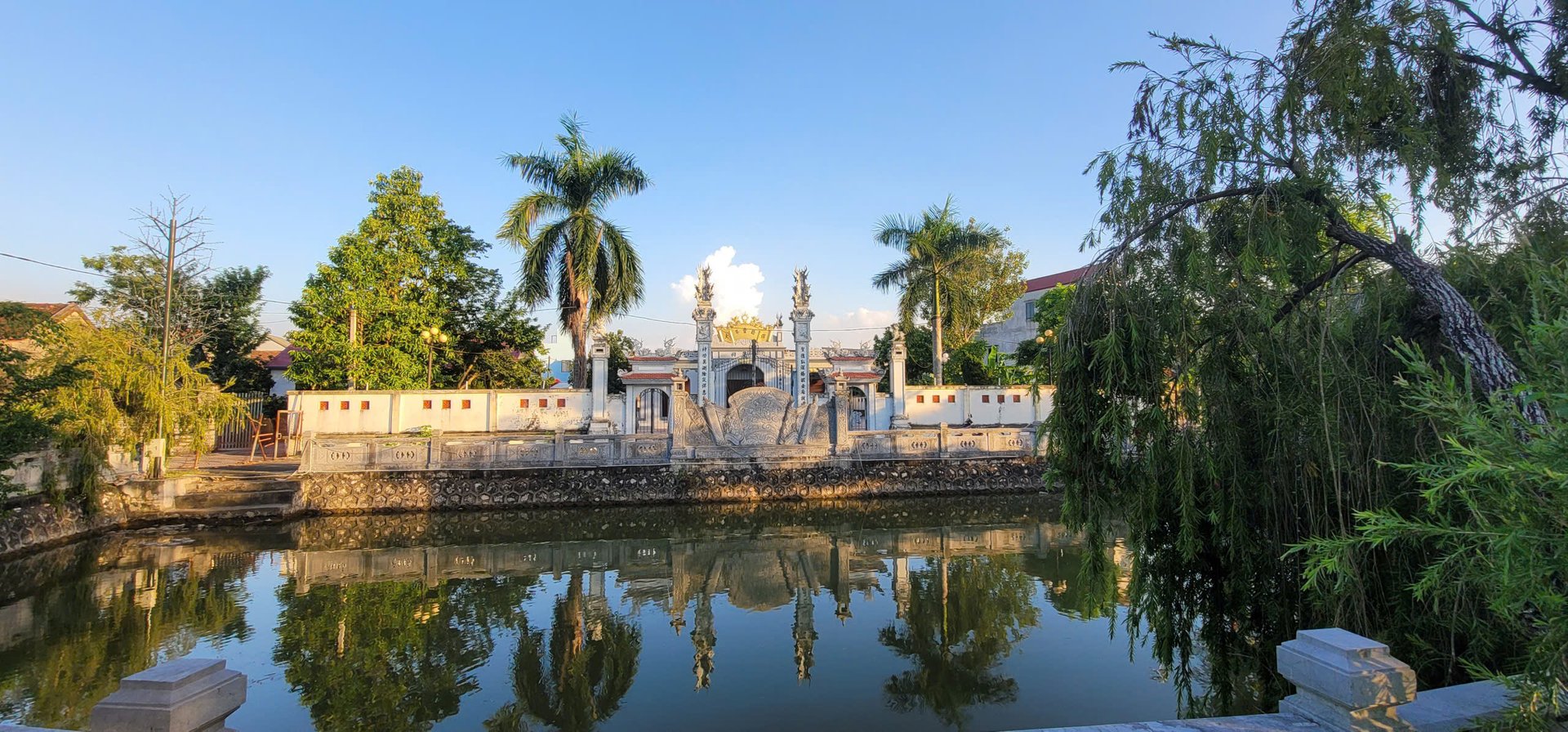
Thượng Phúc Communal House, Hòa Phúc Village, Hòa Phú Commune, Hanoi City
Good to know
- You should arrive early for an open and airy experience
- Free
- Convenient access by taxi or bus.
Introduction
Thượng Phúc Communal House is a religious architectural work dedicated to two Great Kings, Supreme Deities: Đức Ông Cả Đài Vàng Hoằng Tế Diễn Khánh Đại Vương and Đức Ông Bố Cái Sô Tha Đại Vương.
The communal house has undergone several restorations: Bảo Đại 11 (1936) major restoration; in 1999 and 2004, the roof was recast and some minor items were repaired; in 2011, the Hậu đình building was restored.
The communal house has a Đinh-shaped structure, consisting of two sections: Đại bái and Hậu cung, and it also has an additional Hậu đình section with a Nhất-shaped structure.
Thượng Phúc Communal House was built in 1936, at the end of the Nguyễn dynasty, under the influence of Western architecture; the entire communal house was vaulted in the tò vò style, but over time the vault was removed and replaced with a flat roof (ceiling).
Đại bái is a three-bay structure; its porch is built in the Western porch style, the front is divided into 03 parts, and the central part, which is the highest and most prominent, is divided into 2 parts: upper and lower.
Passing through the porch leads inside Đại bái; like the porch, the ceiling of Đại bái is divided into three bays separated by beams. Đại bái is an open, airy section, with windows at both gable ends and side doors at the junction between Đại bái and Hậu cung.
Hậu cung is a longitudinal building connected from the central bay of Đại bái toward the rear. The exterior of Hậu cung is decorated with border patterns running around it along with four pillars. The interior is narrowed and set back inward. The ceiling of Hậu cung is flat, with no dividing beams.
This Hậu đình is the place of worship for Mr. Hàn Đạt. It is a three-bay horizontal building with a roof covered in ri tiles, a plain ridge, two đấu đinh ornaments at the two ends of the ridge, and stepped two-tier brickwork at the end of the ridge. Inside, the trusses are made in the style: "thường chồng rường, giá chiêng, hạ kèo kể, hiên"
More Other places
- Other placesVerified
Gioi Duc Pagoda (Hong An Temple)
Ung Hoa Commune
5.0Free  Other placesVerified
Hai Giac Pagoda
O Dien Commune
5.0Free Other placesVerified
Phuong Bang Pagoda (Hung Long)
Son Dong Commune
5.0Free Other placesVerified
Sung An Pagoda, also known as Sung Khang Pagoda (Dong Ba Pagoda)
Thượng Cát Ward
5.0Free
