
Trúc Động Communal House - Đồng Trúc
5.0Free
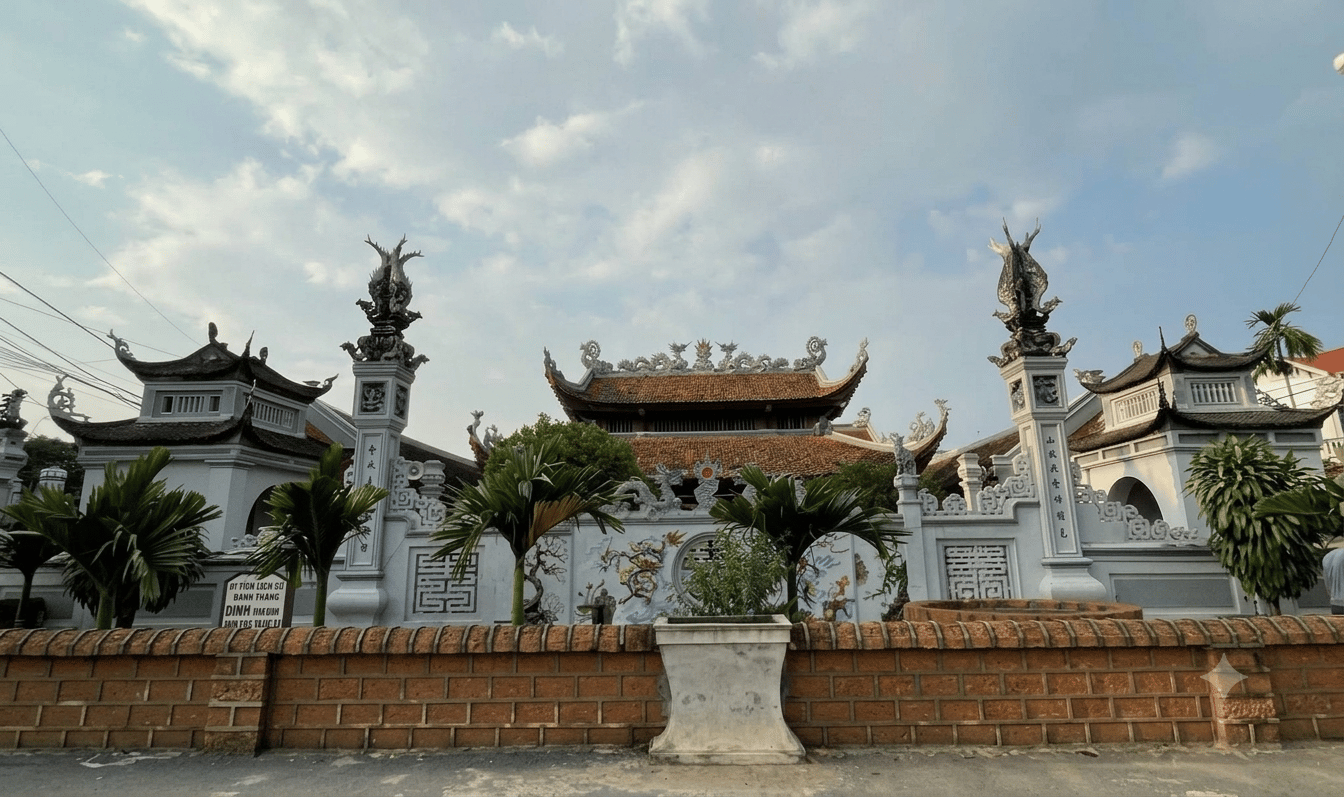
Trúc Động Communal House: A Masterpiece of Ancient Architecture and Legendary Relics in the Land of Trúc Động
Peacefully located in the south of Thạch Thất District, Đồng Trúc Commune (formerly), now part of Hạ Bằng Commune, has long been known as a land rich in cultural and historical sediment. Among the three ancient communal houses still preserved intact locally—Trúc Động, Đồng Táng, and Đồng Kho—Trúc Động Communal House stands out as the most brilliant highlight. It is not only the district's most ancient architectural work but also preserves heroic pages of history and countless precious heritages of the northern Vietnamese countryside.
Stepping through the communal house gate, visitors enter not only a religious space but also turn the pages of a legendary epic. The tutelary deity worshipped at Trúc Động Communal House is Giám Sát Đại Vương, said to be a son of Lạc Long Quân and Âu Cơ.
The most striking historical imprint of the communal house is linked to the Trưng Sisters' uprising in 40 AD. Legend has it that during a military campaign to drive out Tô Định's troops, the Trưng Sisters set up camp to rest at Trúc Động. That night, they dreamed of a dignified elderly man entering the camp, identifying himself as the Giám Sát deity of Trúc Động Village and vowing to provide unseen assistance to help their army defeat the enemy. The very next day, the Trưng Sisters raised their flag and led the troops out, crushing Tô Định's army, recovering 65 citadels, and restoring the Hùng Vương realm. Grateful for this unseen assistance, the Trưng Sisters instructed the villagers to build a shrine to worship him and conferred on him the title of Thượng đẳng thần (Supreme Deity).
Set on a campus of more than 3 northern Vietnamese sào with spectacular natural scenery, Trúc Động Communal House bears strong hallmarks of Vietnamese village communal house architecture from the 16th–17th centuries. In front of the communal house is a fragrant lotus pond about one mẫu in size, beside which is an ancient laterite well 2.5 m in diameter. The entire grounds are enclosed by a laterite wall characteristic of the Đoài region. Right before the broad courtyard, two stone elephant statues from the Nguyễn era stand guard majestically, creating a serene and solemn appearance.
The overall communal house was built on a grand scale, with main components including the Tiền tế (Front Ceremonial Hall), Đại bái (Great Worship Hall or Đại đình), and the two ranges Tả vu and Hữu vu:
Front worship hall: It features an eight-roofed chồng diêm structure with gracefully curved đao lá corners and exquisitely carved dragon heads. The truss sets are made in the 19th-century chồng rường style, standing firmly on rows of round wooden columns and square stone bases.
Great Ceremonial Hall: Built in the 18th century, it comprises five bays arranged horizontally, with a roof covered in mũi hài tiles bearing ancient spiral cloud patterns. Inside, the rường cốn truss sets rest on the câu đầu beams, while the sturdy main columns and military columns provide excellent load-bearing capacity and stand on solid blue stone bases.
The core artistic value of Trúc Động Communal House lies in the exquisite woodcarving art on the truss sets of the Tiền tế and Đại bái. Inspired by the four sacred creatures (dragon and phoenix) and traditional flowers and leaves, artisans of the late Lê and early Nguyễn periods breathed life into every wood grain. In particular, the dragon carvings at the ends of the bẩy and đầu dư in the Đại bái, in late 18th-century style, appear decisive and coherent, never elaborate yet extremely robust and open.
A Treasury of Hán-Nôm Heritage and Archival Value
More than an architectural masterpiece, Trúc Động Communal House is a true museum of cultural archives. The communal house currently preserves 33 precious royal edicts spanning various dynasties, from the oldest edict, dated the 3rd year of Đức Long (1632), to the last, from the 9th year of Khải Định (1924).
In particular, the communal house also preserves four genealogical records, notably the "Trúc Động xã sự tích" (Records of Trúc Động Commune). These texts are not only rare materials for the written history of Vietnamese villages but also an invaluable foundation for current efforts to digitize heritage and build cultural databases. Thanks to these materials, researchers have additional evidence confirming the homeland of the Trưng Sisters in the Hạ Lôi area (Hạ Bằng, Thạch Thất), while also clarifying the scale map of the uprising across the lands of the Đoài region.
In addition, a Lê-era stone stele recording regulations on land, titles, and village festival rules, together with a pair of gilded and lacquered wooden cranes 2.62 m tall standing on turtles' backs in the Đại bái, are artifacts testifying to the ancestral religious life and strict village conventions.
With its immense historical and artistic architectural values, Trúc Động Communal House was ranked by the State as a National Historical-Cultural Relic in 1991.
Today, the communal house not only welcomes scientists and students for internships and research on village culture but is also a spiritual tourism site attracting visitors from far and wide. Every year, the village festival is solemnly held on two occasions: spring (the 12th day of the 2nd lunar month) and autumn (the 13th day of the 8th lunar month). Coming to the Trúc Động Communal House festival, visitors can immerse themselves in the solemn atmosphere of sacrificial rituals, enjoy folk performing arts, and directly take part in traditional games, gaining a deeper understanding and love for a moss-covered, tranquil heritage region amid modern life.



