
Tu Hoang Communal House
Introduction
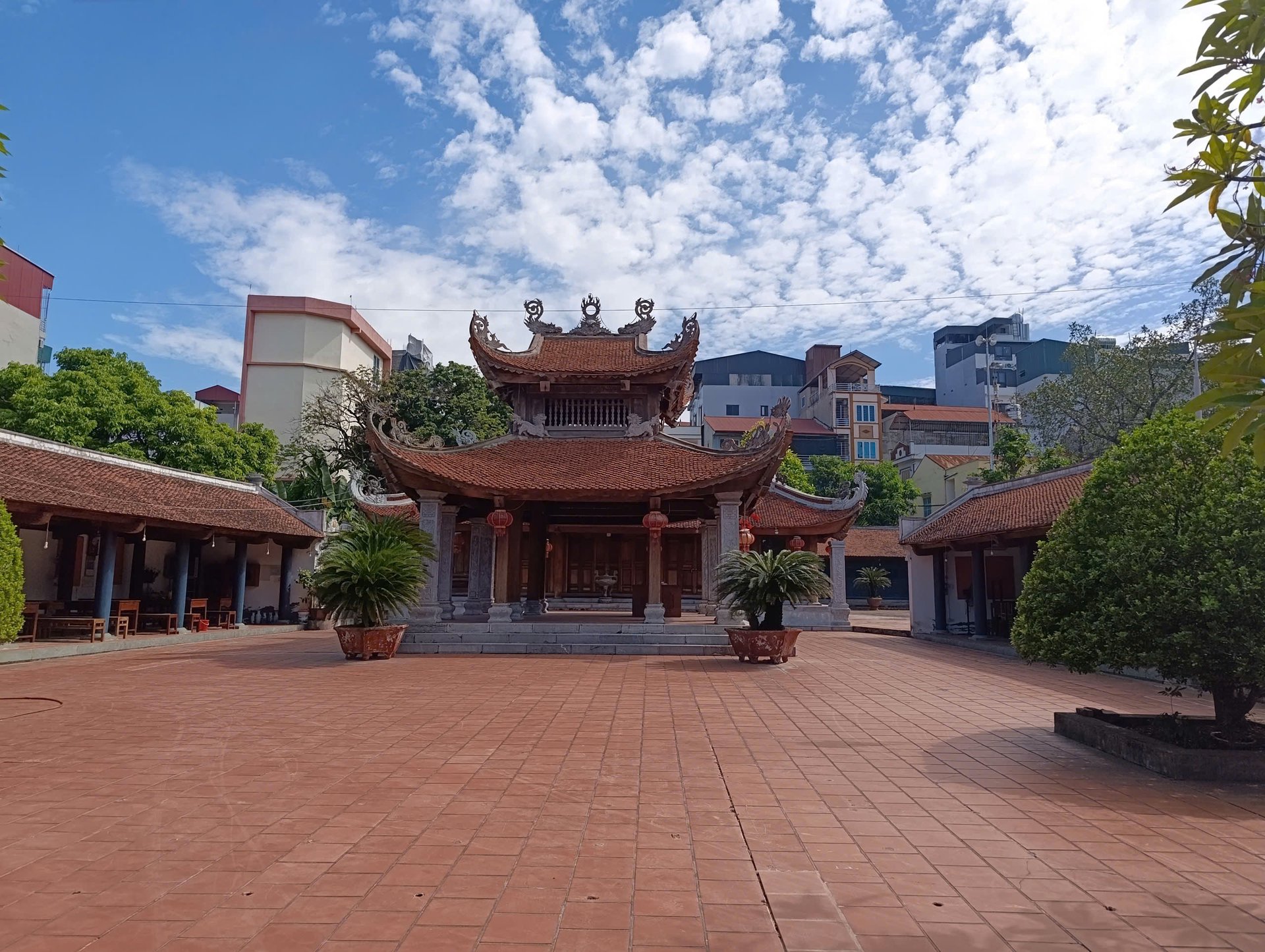
Tu Hoang Communal House is the ancient communal house of Tu Hoang Village, now in Xuan Phuong Ward, Hanoi. Previously, the relic belonged to Xuan Phuong Commune, Tu Liem District. It is one of the places of worship Ly Nam De in the western area of Hanoi, a place that once preserved quite vivid memories of the king who founded the Van Xuan state. Today, the residential groups named Tu Hoang still belong to the area of Xuan Phuong Ward.
According to tradition, after Ly Nam De passed away in the 6th century, local people established a place of worship for him. However, no direct documentary evidence confirms that the current communal house was built from that time. The earliest dated artifact introduced in documents is a royal edict from the Canh Hung era in 1783, showing that the worship of Ly Nam De in Tu Hoang has existed stably at least since the 18th century.
The communal house architecture currently includes the three-entrance gate, the square pavilion, two rows of Left and Right auxiliary halls, and the main hall. Prominent at the center is the square pavilion, built in the two-tiered, eight-roofed overlapping-eave style. On both sides are subsidiary buildings, five bays each, creating a balanced arrangement for the courtyard.
Further inside is the main hall, organized in the form chuoi vo. The front ceremonial hall consists of three bays and two wings, using traditional wooden structures with upper ridge beam–lower cantilever and upper ridge beam–lower bracket systems. Behind the front ceremonial hall is the three-bay rear sanctuary, where the dragon throne and memorial tablet of Ly Nam De are placed. The decorative art that remains mainly bears the marks of the 19th and 20th centuries.
The communal house still preserves many valuable artifacts such as royal edicts, a copy of the story of Ly Nam De in Han characters, an incense table, a worship platform, a dragon throne, a memorial tablet, an eight-bearer palanquin, a stone stele, and ceremonial paraphernalia. In particular, on the memorial tablet in the rear sanctuary there is a line in Han characters honoring him as “King of the Nation, Son of Heaven, Emperor Ly Nam De”.
On 2 March 1990, Tu Hoang Communal House was classified by the Ministry of Culture and Information a National Architectural and Artistic Relic.
Amid the rapidly urbanizing space of western Hanoi, Tu Hoang Communal House remains a place connecting an ancient village with memories of the Van Xuan state and the emperor who laid the foundation for a period of struggle for the nation's right to self-governance.
In 542, Ly Bi gathered forces and rose up. The uprising quickly developed, driving out the Liang administration and regaining autonomy. By the year 544, he ascended the throne as emperor and adopted the era name Thien Duc and established the country name as Van Xuan. That name conveyed the aspiration for an independent country that would endure for a long time.
In Lich trieu hien chuong loai chi, Phan Huy Chu recorded that Ly Bi was a man talented in both letters and martial arts. He had once served as an official under the Liang but was dissatisfied with the rule and oppression, and later returned to gather forces to resist the colonial administration.
For the people of Tu Hoang, Ly Nam De is not only worshipped as a village guardian deity. On the memorial tablet in the rear sanctuary, he is honored as “King of the Nation, Son of Heaven, Emperor Ly Nam De”. That designation emphasizes the status of a king who took the initiative to proclaim himself emperor and set a separate national name for the country.
Studies on the worship of Ly Nam De show that Tu Hoang lies within a fairly wide network of villages worshipping him in western Hanoi. Documents also suggest that Tu Hoang was one of the places where Ly Bi's insurgent army passed through and rested during the process of preparing forces.
Therefore, the worship of Ly Nam De in Tu Hoang is not only meaningful as a prayer for the protection of the guardian deity. It is also the community's way of commemorating a figure associated with the aspiration for independence and the name Van Xuan – a special milestone in the history of Vietnam in the 6th century.
Every year, the people of Tu Hoang organize the Tu Hoang Communal House Festival to commemorate the merits of Ly Nam De. The festival database of the cultural management agency records that the festival is held periodically over four days, from the 9th to the 12th day, with the main ritual being the sacrifice to the guardian deity and the festive part including cultural and sports activities and folk games.
The center of the festival is Tu Hoang Communal House. During these days, the usually solemn space of the communal house becomes a place for the community to gather. Incense-offering and sacrificial rites are conducted before the rear sanctuary – where the dragon throne and memorial tablet of Ly Nam De are placed – to commemorate the king who drove out the Liang army and founded the Van Xuan state.
It is noteworthy that the Tu Hoang festival does not exist separately. Hanoi currently has a fairly dense system of villages worshipping Ly Nam De, especially in the Hoai Duc, Tu Liem, and neighboring areas. Many festivals in this system are held in spring, associated with important milestones in his life and career such as the uprising, his enthronement, or the times the insurgent army passed through villages.
After the solemn sacrificial rites are cultural activities and folk games, creating opportunities for people to meet, enjoy the festival, and maintain community relationships.
The value of the Tu Hoang Communal House Festival therefore lies not only in the rituals before the guardian deity's altar. Each festival season is also an occasion for people to recount the story of Ly Nam De and the Van Xuan state and to pass on to later generations the historical memory that has been preserved in the village communal house over many generations.



