
Yen Lac Communal House - Can Kiem
Good to know
- You should arrive early for an open and airy experience
- Free
- Convenient access by taxi or bus.
Introduction
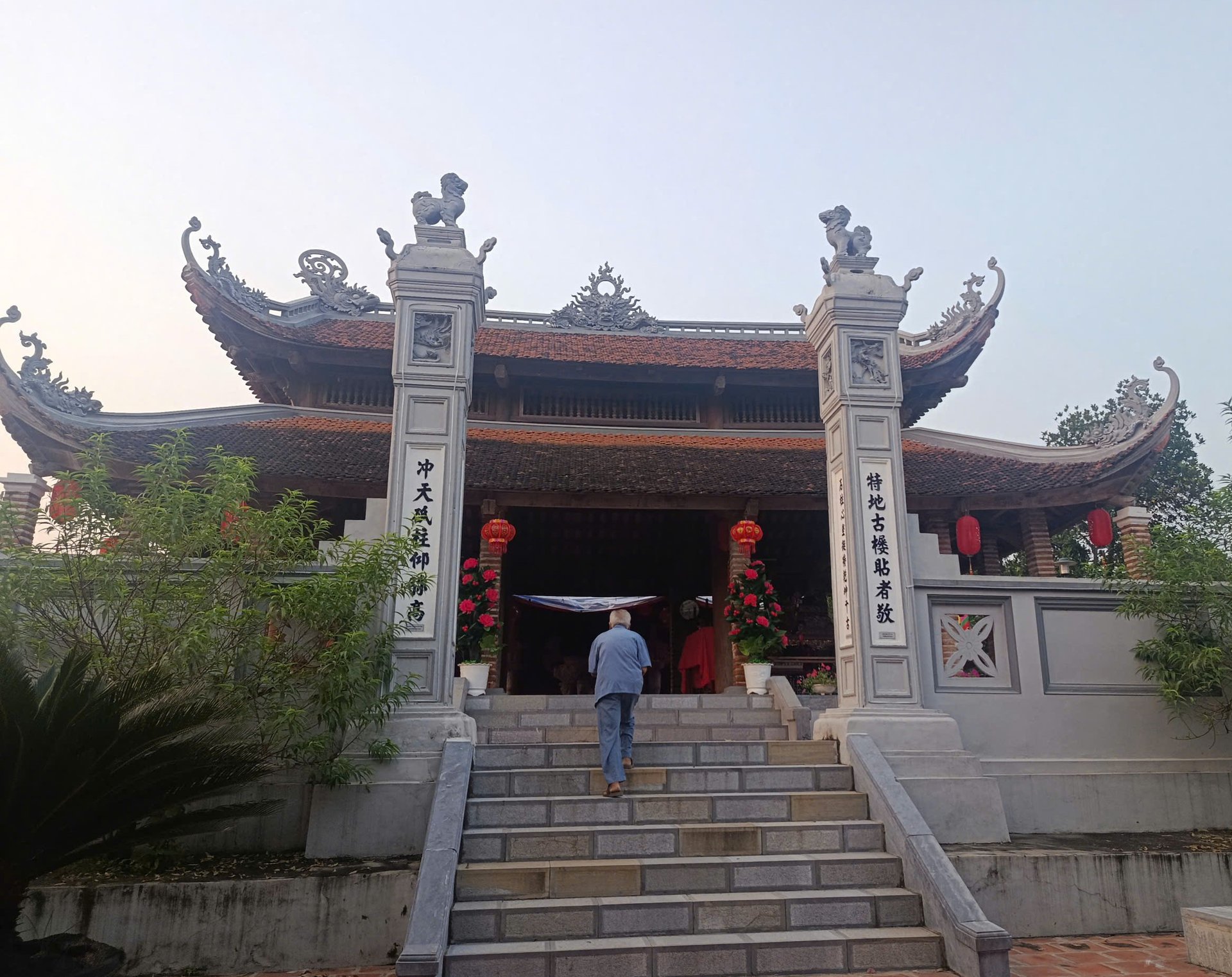
Yen Lac Communal House – A 550-Year Heritage Piece Beside the Poetic Tich Giang River
If there is a place that fully preserves the boundary of memories of the ancient Doai region, where there are banyan tree, river wharf, communal house yard, ancient well existing peacefully like a watercolor painting, that is Yen Lac Communal House (Can Kiem Commune, Thach That District, Hanoi). Nestled beside the gentle Tich River, the communal house is not only a solid spiritual anchor for the people of ancient Guom Village but also an attractive cultural tourism destination for those who want to return to the pure rural space of the Northern Delta.
Contents
Story
011. Rustic Imprints Beside the Tich Giang River
Built in the Ky Suu year (1469) under King Le Thanh Tong, Yen Lac Communal House has gone through more than 550 years of ups and downs with history. The communal house was ranked as a National-Level Artistic Architectural Relic from January 18, 1993.
Visiting Yen Lac 1 Village today, visitors will immediately be impressed by the pristine cultural space that local people have joined hands to preserve through generations:
Cluster of nine ancient banyan trees: Standing tall right at the village gate, spreading cool shade over an area rich in rural character.
Ancient water well, cool and clear all year round: Once a source of domestic water that sustained generations, the ancient well is still a 'jewel eye' connecting the present with the past.
Pair of kneeling elephants made of rare laterite: Located on a high mound with the position tiger's mouth looking out to the Tich River, the pair of laterite elephants kneeling in attendance before the sacred house is a unique and rare folk sculpture, among the most precious in Thach That region.
022. Wooden Architectural Structures and Exquisite Carving Art
Overall, Yen Lac Communal House was built in the shape of the character Nhi, consisting of two parallel buildings: Dai Bai (Main Hall) and Hau Cung (Rear Sanctuary):
Dai Bai Hall (five bays with two side wings): It stands out with a two-tier, eight-roof structure with graceful curving eaves. The truss system is made in the style of 'stacked beams with pendants, tie beams, and braces,' helping the massive architectural block become light and soaring. The carving art at Dai Bai is strongly imbued with the Nguyen Dynasty style, with themes of the Four Sacred Creatures (Dragon, Unicorn, Turtle, Phoenix) and the Four Noble Plants (Pine, Chrysanthemum, Bamboo, Plum) carved in openwork and relief with great vividness.
Rear Sanctuary: This is where an ancient altar niche in the Le Dynasty artistic style is placed; inside, three tablets of the village tutelary god are solemnly enshrined. Above, a splendid red-lacquered and gilded large horizontal plaque is solemnly hung, bearing four Chinese characters: Supreme Most Sacred Shrine.
033. Place of Worship for Legendary Generals
Yen Lac Communal House is the place of worship for three Great Kings, supreme-ranking meritorious officials: Trung Cong, Hoang Cong, and Dung Cong. According to the legend, the three generals were originally from Thien Truong (Nam Dinh), later settling in Yen Lac Village. When the country faced upheaval, the three men enlisted under the command of Saint Tan Vien Son, achieved many glorious victories, helping the 18th Hung King drive out invaders and protect the borders of Van Lang.
In addition, the communal house also jointly worships the famous general Nguyen Kinh – a talented civil and military official of the Mac Dynasty, an outstanding son of the neighboring Di Nau land.
044. Heritage Treasure and the Spring Festival Picture
Although it has undergone several major restorations in 1998, 2014, and 2016 to preserve the temple structure, Yen Lac Communal House still fully preserves a 'treasure trove' of valuable tangible artifacts:
14 ancient imperial investiture edicts with historical value across dynasties (especially during the reign of Emperor Tự Đức).
A rich system of worship objects from the Nguyễn era: 4 procession palanquin sets exquisitely carved, along with sets of double and single incense altars.
If visiting Yên Lạc on the occasion of the 12th day of the first lunar month annually, visitors will immerse themselves in the atmosphere Yên Lạc village festival. The festival preserves distinctive features of folk cultural activities with a solemn palanquin procession, traditional wrestling rings, and a heroic martial stick-dancing festival of the people of the Đoài region.
More Other places
- Other placesVerified
Gioi Duc Pagoda (Hong An Temple)
Ung Hoa Commune
5.0Free  Other placesVerified
Hai Giac Pagoda
O Dien Commune
5.0Free Other placesVerified
Phuong Bang Pagoda (Hung Long)
Son Dong Commune
5.0Free Other placesVerified
Sung An Pagoda, also known as Sung Khang Pagoda (Dong Ba Pagoda)
Thượng Cát Ward
5.0Free
