
Cổ Loa Festival
Introduction
The Cổ Loa Festival, also known as the “Bát Xã Hộ Nhi” festival or the Bát Xã Loa Thành festival, is a traditional festival and was included in the National List of Intangible Cultural Heritage under Decision No. 603/QĐ-BVHTTDL dated February 3, 2021, of the Ministry of Culture, Sports and Tourism. With its typical and representative values, it expresses the identity, creativity, and cultural diversity of the Bát Xã community, who together worship the Saintly Ancestor Emperor An Dương, as shown through ritual and belief practices in the ceremonial part and the festival part.
The central space for practicing the Cổ Loa Festival is the Nội Cổ Loa citadel area, which contains a complex of architectural relics including temples, communal houses, shrines, and guard posts, where King An Dương Vương, Mỵ Châu, the Kim Quy deity, General Cao Lỗ, and related figures are chiefly worshipped. Among these, the “core” space of the festival is the Thượng Temple area (worshipping the Saintly Ancestor Emperor An Dương and those who rendered service to the people and the country) at Cổ Loa.
The Bát Xã community together worships the Saintly Ancestor Emperor An Dương (today comprising 8 villages: Cổ Loa, Văn Thượng, Mạch Tràng, Sằn Giã, Ngoại Sát, Đài Bi, Cầu Cả, and Thư Cưu) and is the cultural subject—the creative subject—that practices the Cổ Loa Festival. Among them, the Cổ Loa village community plays the main role in directing the ritual ceremonies and the festival procession.
The festival is held on the 5th–6th days of the first lunar month each year (the 6th is the main festival day). The Cổ Loa Festival is large in scale and involves close coordination among the city’s state management agencies, the Thăng Long–Hà Nội Heritage Conservation Centre, the Cổ Loa Relic Site Management Board, the Party Committee and People’s Committee of Đông Anh Commune, and the communities of villages and hamlets that practice the festival; it has become an important, major festival of the capital and the whole country.
The Cổ Loa Festival is a major regional festival with the participation of Bát Xã (eight ancient villages sharing the same belief in worshipping An Dương Vương), with a solemn process of rites and ceremonies carefully prepared by the people of the villages and communes for many months before the festival, often starting in the eleventh lunar month and at the latest in the twelfth lunar month of the previous year. The preparations for the festival are as follows:
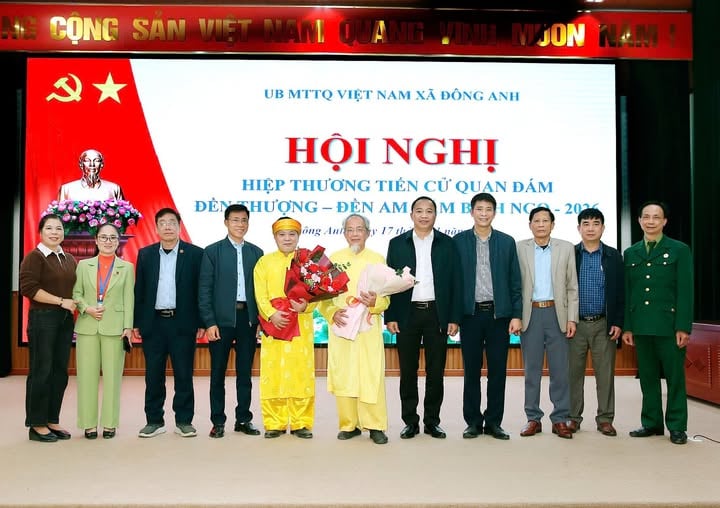
Election (nomination) of Quan đám (temple keepers): two Quan đám are selected to oversee the “clean grass—red incense” at the Thượng Temple and the temple to Princess Mỵ Châu.
Meeting of the Bát Xã Council: also held at the beginning of the twelfth lunar month, after the Quan đám election is completed, to assign tasks for organizing the festival Cổ Loa, on the basis of the village convention, stipulates very strict matters such as ritual training, personnel participating in the festival, palanquin processions, preparation of offerings, and performance of ceremonies: purification, procession of votive paper, cleaning of communal houses and temples, etc.
Division of tasks: Cổ Loa village takes the role of directing and organizing the festival, drafting the “Chúc văn” invocation, serving as chief celebrant, and appointing the Đông xướng chanter; Văn Thượng reads the invocation; Mạch Tràng appoints the Tây xướng chanter; Ngoại Sát acts as “Củ soát” inspector, checking the ritual offerings and gifts brought by the communes to offer to the king; Cầu Cả is assigned “Phủng chúc” (carrying the invocation); Sằn Giã, Đài Bi, and Thư Cưu perform “Phủng tước” (offering wine) and “Phủng hương” (offering incense). The reading of the invocation text in the male-official sacrifice is assigned to Văn Thượng. According to Cổ Loa’s old custom, there are four cai đám and eight lang cai; these people share the task of looking after the work at Bà Chúa’s shrine, Ngự Triều Di Quy communal house, and the Thượng Temple, to handle ritual matters and arrange worship objects and ceremonial weapons (usually during the festival they are brought out in the morning and put away at night); this is called bài sáp (participants in lang cai must, by custom, be 50 years old or older). Each unit appoints one person to participate in bồi bái; the board directing the procession is the bài sáp board.
Ritual practice and procession groups: carried out over about 4 to 5 days near the end of the twelfth lunar month before the festival.
Reading of the Mục lục (ritual text): formerly written and read on the evening of the 6th day of the first lunar month by the Tiên chỉ of Cổ Loa village (the Tiên chỉ and Thứ chỉ were respected, educated, and widely knowledgeable men of the village). Since 1990, the Quan đám has read it on the night of the 30th of the twelfth lunar month at the main hall of the Thượng Temple; its content praises the merits of the Saint (An Dương Vương) and wishes peace and safety for the villagers.
Ritual and reading method: there are three main readers and three assistant readers (the assistant readers repeat immediately the sentence just read by the main reader); the two groups take turns reading each passage, with readers kneeling and facing the incense table while listeners sit on both sides and below. The Mục lục is a rhymed poem whose content speaks of the king’s merits and praises his achievements in building the country. Reading the Mục lục once a year is to recall the history of Cổ Loa and Bát Xã.
The 4th day of the first lunar month: Bát Xã builds the traditional crossbow-shooting platform, sets up the wrestling arena, arranges human chess in front of the courtyard of Ngự Triều Di Quy communal house, and organizes the swing game, etc.
The 5th day of the first lunar month (Tế cáo vào hội—announcement sacrifice at the start of the festival): Bát Xã ritual groups perform sacrifices, ceremonies, games, and artistic performances during the festival. The ritual group sacrifice takes place throughout the day, including four rounds of announcement sacrifices at the start of the festival; in the morning, the first round is performed by Cổ Loa village and the next by Bát Xã; in the afternoon, the first round is by Bát Xã and the next by Cổ Loa. All preparations for the main festival day are completed.
The main festival day, the 6th day of the first lunar month, has two parts: the ceremonial part and the festival part.
Ceremonial part: According to legend, when King An Dương Vương chose Cổ Loa as the site to build the capital, the people of Quậy village gave up land for the king to build the citadel. Therefore, although Quậy village is not named among Bát Xã, because its people are original Cổ Loa residents, they are invited to the festival and perform the secret prayer ritual on the upper mat, while other villages must go out to welcome them. Fifteen elders of the Anh Cả Quậy delegation come to Cầu Cung; at this time, fifteen elders of Cổ Loa village wearing ritual robes—including one drum, one gong, one golden canopy covering the offerings, one ceremonial parasol for the offerings, and two attendants carrying the offerings—come to welcome and escort the Anh Cả Quậy delegation’s offerings into the Thượng Temple for the ceremony, and they are seated on the upper mat.
From early morning, the communes carry their palanquins to Cổ Loa village from two directions. The West side (right side of the Thượng Temple) gathers at the Outer Citadel, including Mạch Tràng, Sằn Giã, Đài Bi, and Cầu Cả villages. The East side (right side of the Thượng Temple) gathers at Sa Market, including Văn Thượng, Ngoại Sát, and Thư Cưu villages. At 7:00 a.m., at the command drum, the two processions advance together into the Thượng Temple; when they reach the west end of the lake, the two processions merge into one in the order Văn Thượng–Mạch Tràng–Sằn Giã–Ngoại Sát–Đài Bi–Cầu Cả–Thư Cưu. The procession enters the Upper Dragon Courtyard and lowers the palanquins in the following order: East side: Văn Thượng, Sằn Giã, Đài Bi, Thư Cưu; West side: Cổ Loa, Mạch Tràng, Ngoại Sát, Cầu Cả. After the command drum, Anh Cả Quậy offers first, then Bát Xã in turn present offerings into the king’s palace.
Two Thủ hiệu officials sound the great drum and great gong three times with nine beats to open the festival. Anh Cả Quậy reads the congratulatory message, performs the ceremony, and reads the secret prayer at the upper mat before the temple gate.
Next is the Hội đồng sacrifice at Cổ Loa, lasting more than two hours with 67 intonations. This is the most important ritual in the ceremonial part of the Cổ Loa Festival, performed by elderly men to welcome and invite the deity to enjoy the offerings, and also an occasion for the villagers to praise the deity, express their gratitude, and pray that the deity will protect the villagers with peace and happiness and bring national prosperity and public safety.
After the Hội đồng sacrifice is the Bát Xã palanquin procession (nghênh rước kiệu). Starting from the Thượng Temple, Cổ Loa village’s palanquin leads, then the palanquins of Văn Thượng, Mạch Tràng, Sằn Giã, Ngoại Sát, Đài Bi, Cầu Cả, and Thư Cưu are received in turn. The procession goes from the Upper Dragon Courtyard down to the Lower Dragon Courtyard, out the temple gate, turns right toward the west, goes down to the south, around Ngọc Tỉnh well lake to the east side, and at the crossroads Cổ Loa village’s procession goes straight into Ngự Triều Di Quy communal house to be seated there. In the afternoon, Cổ Loa performs sacrifices at the communal house, and after the sacrifice the palanquin is carried back to the temple. The remaining Bát Xã villages (Mạch Tràng, Sằn Giã, Đài Bi, Cầu Cả, Thư Cưu) turn left toward the southwest road through the temple gate, while Văn Thượng and Ngoại Sát villages turn toward Sa Market to their own communal houses and continue organizing their village festivals from the 8th to the 16th day of the first lunar month.
Festival part : The Cổ Loa Festival has a rich and attractive system of folk games and performances containing cultural beauty and traditional national values, typically crossbow shooting, swing riding, wrestling, human chess, tuồng singing, water puppetry, etc., attracting a large number of people from all walks of life.
In the past, the Cổ Loa Festival was regularly held every 3 to 5 years for 12 days, from the 6th to the 18th day of the first lunar month; in years of “phong đăng hòa cốc” (bumper harvest), Cổ Loa held a very large festival. Today, the Cổ Loa Festival is held annually.
The Cổ Loa Festival contains the value of folk knowledge. The sacrificial and procession rituals, customary practices, games, performances, and cuisine are a scientific treasure of the people’s thinking values from ancient times to the present. The festival is also an occasion to educate descendants in gratitude for the merits of King An Dương Vương, who built the Âu Lạc state, constructed the citadel, made the Liên Châu crossbow to fight invaders, defended the country, and developed wet-rice farming for the economy; at the same time, it educates younger generations in the tradition of patriotism and always heightens vigilance against all plots by hostile forces to undermine independence and build socialism in the current period.



