
Mạch Tràng Village Festival
Introduction
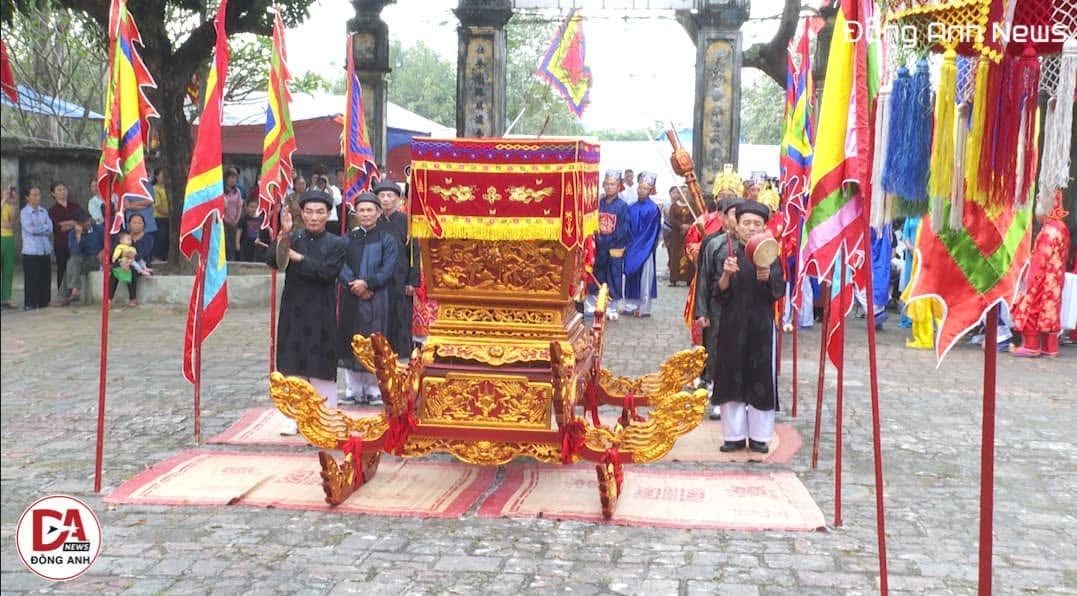
Few villages carry an entire nation-building story in their name. Mạch Tràng does. According to legend, Mạch Tràng is a hamlet located just to the south, outside Cổ Loa Citadel, on high ground beside the Hoàng River. From the Âu Lạc period, King An Dương Vương brought barley seeds here, taught the people to cultivate them, and established Âu Lạc’s granary. Later, in Ngô Quyền’s time, the hamlet was chosen as the site of the national school—hence the name Mạch Tràng (Mạch Trường).
Traces of that past remain in the village communal house: nine sets of royal edicts and one genealogical record from the Nguyễn dynasty. Folk tradition also says that some edicts from the Lê dynasty were lost.
Mạch Tràng Village Festival has existed for a very long time, closely linked to the Cổ Loa Festival and also held to commemorate Thục Phán An Dương Vương. From the sixth day of the first lunar month, together with other villages in the Bát Xã Loa Thành, Mạch Tràng sends a palanquin procession to the Upper Temple for the sacrifice ceremony; the village procession has about 100 people, including attendant guards, a music troupe, a weapon troupe, a flag-bearing troupe, sacrificial officials, a flag-waving dance troupe (four children), and a female ritual troupe. Then the palanquin is carried to the village communal house, waiting for the day the village opens its festival.
On the afternoon of the ninth day of the first lunar month, officials perform sacrifices at the village communal house; wrestling and air volleyball competitions open. The morning of the tenth day is the main festival: the festival opens, and officials perform sacrifices at the communal house. The ceremony includes a chief celebrant, a reader of the eulogy, two lamp keepers, two gong and drum players, one western and one eastern ceremonial attendant… about 30 people in all. After the sacrifice ceremony come folk games and sports lasting until the afternoon. On the twelfth day of the first lunar month, the village holds the flag-lowering ceremony—the festival ends.
Mạch Tràng’s offerings include fruit, glutinous rice, chicken, round glutinous rice cakes, bỏng chủ, oản, and sesame cakes; the altar items include offering trays, candlesticks, incense bowls, and bronze censers. Procession items include the Bát Cống palanquin, a literary palanquin, weapons such as swords, parasols, deity flags, and the eight precious objects. The sacrificial team wears white trousers, blue ceremonial robes, ceremonial hats, and shoes; the incense-offering team wears white trousers and yellow shirts.
The festive part is lively with traditional wrestling, swinging, pot-smashing, Chinese chess, air volleyball, quan họ duet singing, health exercises, and evening cultural exchange performances.
The rituals in the festival have remained almost unchanged from the past to the present; only the scale of the festival is larger, with more sports and folk games. The communal house has been equipped with additional procession and altar items thanks to support from local authorities and donations from the people; the village also actively promotes the meaning of the festival—commemorating the merits of predecessors and arousing pride among those who are the subjects of the festival.



