
Xuan Trach Village Festival
Introduction
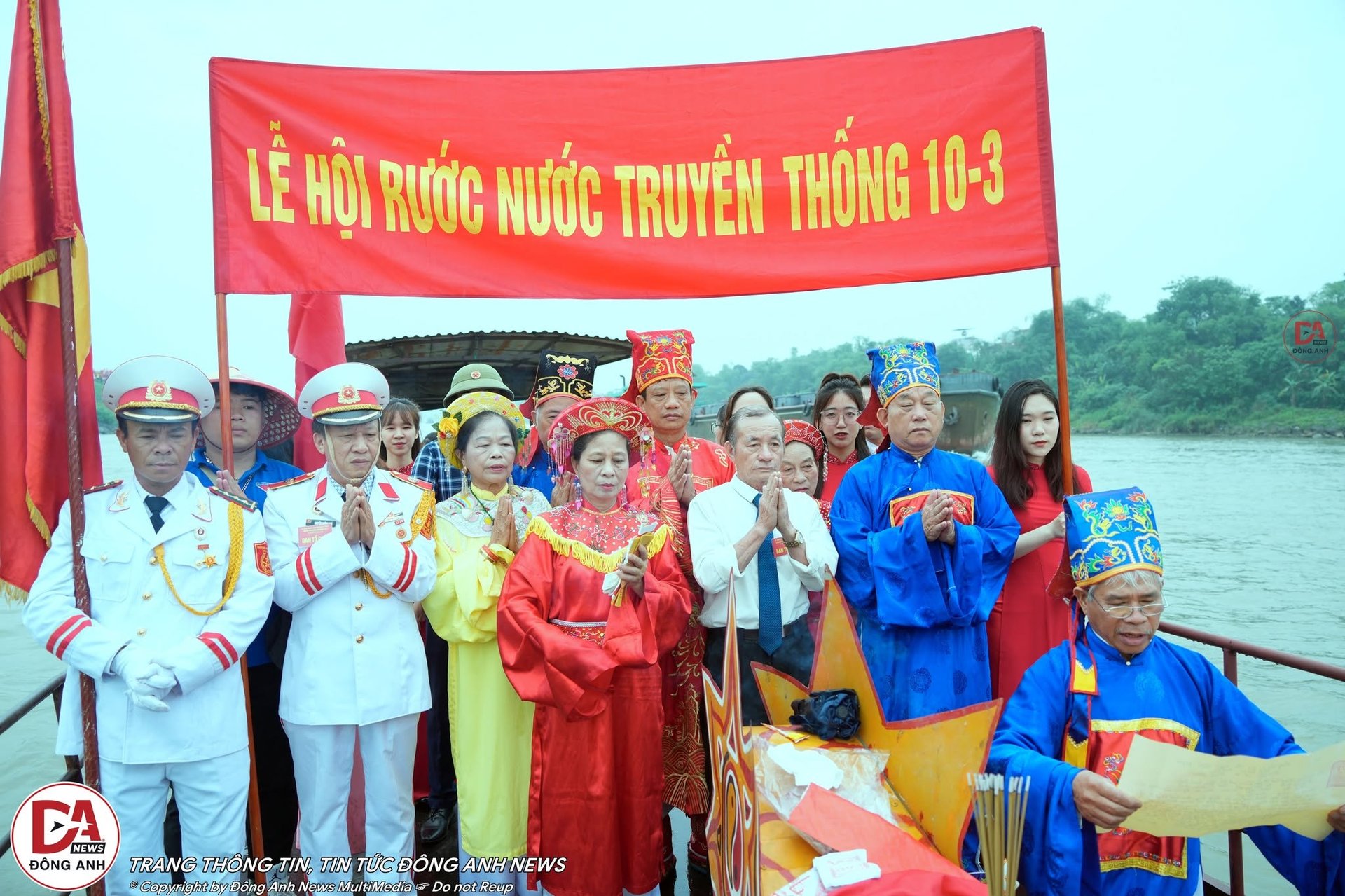
Xuan Trach Village, with its riverside location and fertile land, has long had villagers mainly engaged in farming, growing food crops such as rice, maize, potatoes, and peanuts, and raising silkworms. Like the Vietnamese people in Northern Delta villages, the people of Xuan Trach have a rich religious life, including indispensable worship of the village guardian deity. The Xuan Trach Village Water Procession Festival also stems from this worship of the village guardian deity.
The traditional festival of Xuan Trach Village is associated with the legend of the mother and son who were the village guardian deities. The deity's legend is engraved on a stone stele: 'Xa than ngoc pha bi ky' (an inscription recording the village deity's legend), together with royal edicts still kept at the communal house, which state: Xa Than Quoc Lang was the fifth son of Hung King XVII - Nghi Vuong - and Lady Ngoan Phi Van (the fourth concubine) from Xuan Trach hamlet. Legend says he was a dragon deity sent by Heaven to become her son. He was born on the 10th day of the third lunar month in the year At Suu. At the age of six he was already skilled with the bow like a god, and his father the king loved and praised him greatly and named him Xa Than Quoc Lang. He had merit in saving the hamlet's people from an epidemic and, together with Tan Vien Son Thanh, helped the Hung dynasty fight invaders and defend the country. After his death, the court bestowed the honorific title 'Xa Than Quoc Cao Minh Son Thanh chu' for eternal worship with incense and flowers forever.
According to ancient custom, the village festival is held for five days from the 8th to the 13th of the third lunar month; the 10th day of the third lunar month is the main festival day, coinciding with the Hung Kings' death anniversary. The communal house is where the village guardian deity is worshipped; the temple is where the Holy Mother who gave birth to the guardian deity is worshipped. The festival space is at Xuan Trach Village communal house.
In the past, the ly truong or pho ly served as chief celebrant and managed and directed common festival affairs. The Council of Notables was responsible for advising and supervising ritual and deity-worship matters. The tu van association elected a ritual board, whose head of ceremonies was called ong dien le. Ong dien le was mainly responsible for assigning festival tasks and organizing and guiding the rules and rituals at the communal house. Each giap in the village had to prepare material conditions such as buying food and provisions, offerings for the deity, incense, flowers, betel and wine, preparing offerings and trays, and handling guest reception... Each giap had to select handsome young men and beautiful young women to take part in the water procession at the festival. For the people of Xuan Trach, the offerings are called cung tan phi le, meaning modest offerings, usually carried out by ong dien le and the giap in the village. The village had public fields to serve these offerings. Offerings include: incense, lamps, candles; tea, wine; betel and areca; fruit; votive paper; chicken; pork; carp; beef; glutinous rice; cakes; vegetarian trays; offerings with a pig's head; offerings with a whole pig; pig's trotters. Especially, among the offerings to the saint, floating rice cakes (banh troi) are indispensable. Every household in the village must have banh troi placed on the ancestor altar on the village festival day. The people of Xuan Trach do not celebrate the Cold Food Festival like other places; they only make this cake during the village festival to offer to the saint. On the 8th, the festival opens and the water procession is held; on the 9th, the 'Bathing of the Saint' ceremony takes place; on the 10th, the main festival day, ceremonies are held to worship the village guardian deity at the communal house and the Holy Mother at the temple; the 11th is the day of the elders (the men at the communal house over 50 years old who have been recognized into the elders' rank and have performed the elder-honoring ceremony at the communal house); the 12th is the day of cha bon ong linh (the heads of the four giap); in the afternoon and evening there are also entertainment and performances of trong quan singing and riddle singing; the 13th, the birthday of the Holy Mother, is the day of the ladies' association, the festival of the elderly women at the temple (this is the day when widowed elderly women perform the ceremony of entering the Mother's gate).
Today the festival still takes place annually and has become an indispensable village custom. It still ensures procedures and rituals as before, but some procedures have been shortened and simplified. The village festival is now condensed into one day, the 10th day of the third lunar month.
The most outstanding feature of the Xuan Trach Village Festival is the water procession and the bathing of the saint. On the morning of the 10th, the organizing committee, elders, departments, unions, and a large crowd of villagers gather in the communal house yard for the opening ceremony, after which they arrange the formation for the water procession. Bringing water back for worship is a sacred act of water-praying belief dating from ancient times in the minds of riverside people in the Northern Delta, with the wish for a year of favorable weather and good crops.
Before the water procession, an elderly person beats a large drum to give the order. The chief celebrant and representatives of the organizing committee make offerings to ask permission to go for the water. There are six trays for the water procession: one at the communal house, one at the temple, one at the pagoda, and three carried to offer to the river deity. Two trays are taken to the river and given to the boatman to perform a ceremony asking the river deity for protection so that the water-collecting group may have smooth sailing. The remaining tray is used by the chief celebrant and a village elder to perform a ceremony on the river asking the deity's permission to take water. The procession goes in two rows (one side carrying water back to the communal house, the other to the Holy Mother's temple) with flags, parasols, dragon heads, offering trays, drums, gongs, bat am, thanh la, chap kich, eight-carried palanquins, ceremonial jars with parasols, etc., and representatives of departments, unions, and villagers. All sincerely follow the procession with reverence and pride. The procession goes out to the dike bank to the gao tree at the village entrance, where a ceremony is held before boarding boats to take water. The water-taking location is the middle of the river junction where the Duong River and Red River meet. The chief celebrant performs procedures to ask the river deity for permission to take water into the jar. Before scooping water, people throw a circle tied with red string and scoop water inside it to avoid impurities in the river. The chief celebrant at the communal house takes 7 ladles of water into the communal house jar, while the chief celebrant at the temple scoops 9 ladles into the temple jar. When the water-taking ends, the procession begins carrying the water back. When the water procession returns to the fork, it divides into two groups turning into the communal house and the temple. When the water procession reaches the communal house yard, they gather to rest. The elders in the ritual board assigned to prepare the water brought back then perform the bathing of the saint and afterward the deity-worship ceremony. At the temple, when the water procession arrives, the elderly women at the temple take the water back to perform the moc duc ceremony, wiping the ritual objects at the Mother's altar, and then prepare the incense-offering team to perform the Holy Mother worship ceremony.
For the Xuan Trach Village Festival, the water is reverently carried from the river junction to the communal house. Besides expressing the longing for a year of favorable weather, lush plants, and thriving all things, it has another very specific meaning: taking water flowing from the ancestral homeland at Bach Hac, Viet Tri, to bathe the saint on his birthday, to open the seven orifices, so that he may have superior intelligence and power. After the water procession reaches the village communal house, two strong young men are assigned to carry the jar of water covered with a red cloth into the inner sanctum for the elders of the ritual board to perform the bathing of the saint. Once a year, the tu van association elects three people from the ritual board to perform the bathing of the saint. The three chosen are people aged 50 or over with good moral qualities, prestige in the village, education, success in life, a peaceful family, children in harmony, awareness of purity before the saint's gate, and complete virtue.
The bathing of the saint is performed symbolically by wiping the tablet, throne, and dusting the hats, robes, boots, and other objects of the saint in the inner sanctum. Therefore, those assigned this task feel very honored and proud to be chosen that year. The bathing of the saint is conducted in the inner sanctum; every action and movement is extremely gentle, careful, serious, and reverent. When the bathing ends, the three people go out and report to the tu van association and organizing committee that it is finished; the ritual board then prepares to form the procession for the deity-worship ceremony. After the ritual board has completed the deity-worship ceremony, villagers, departments, unions, neighboring villages, and pilgrims come to worship the saint and the Holy Mother.
It can be seen that the ritual in the festival is a set of reverent, sacred actions and behaviors expressed in an orderly and systematic way, to show the faith and reverence of people and the village community toward the gods in general and toward the guardian deity and Holy Mother of Xuan Trach Village in particular. The Xuan Trach Village Festival is truly a cultural and religious activity that expresses the strength of the community and the cohesion of the village. Everyone coming to the festival shares the same thought and aspiration to return to their roots, with the wish for favorable weather, peace for people, and prosperity for all things. For this reason, from past to present the traditional festival has been preserved, maintained, and is the pride of the local people. Through festival activities, with the preparation and participation of community members, it contributes to educating them to become people of the community, to live for the community, to be grateful to ancestors, to remember the source when drinking water, and to live responsibly toward their homeland.
It can be said that the traditional Water Procession Festival of Xuan Trach Village contains cultural values refined through many generations. It is a way of life and lifestyle formed on the humane values of people, in harmony with natural and social factors. This also helps the Water Procession Festival endure over time and be the pride of the people of Xuan Trach Village.



