
Traditional festival of Bao Loc village, Phuc Loc commune, Hanoi city
Introduction
Traditional festival of Bao Loc village, Phuc Loc commune, Hanoi city
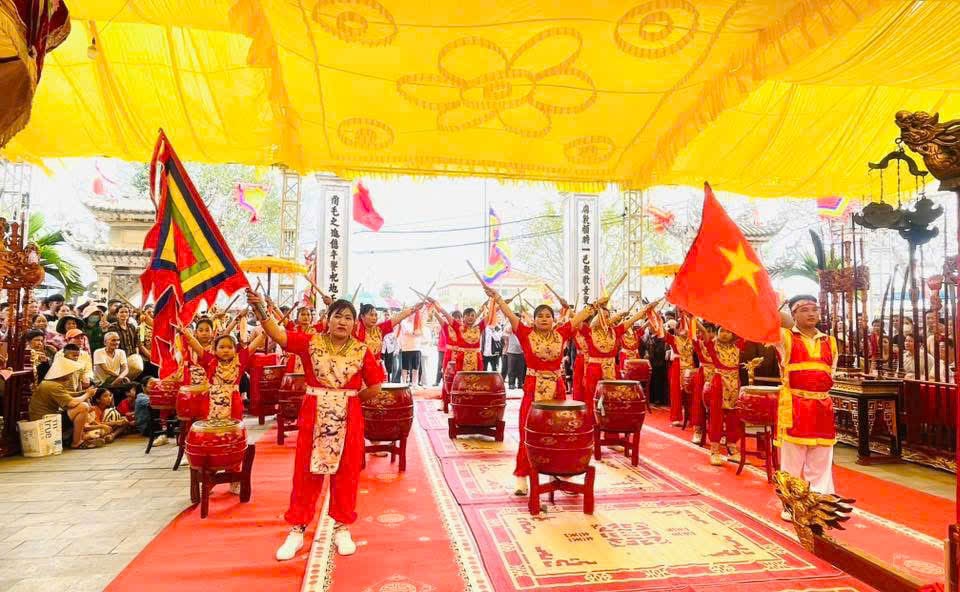
The traditional festival of Bao Loc village is a cultural and folk-belief activity maintained and practiced for generations by the community of Bao Loc 1, 2, 3, 4 and 5 hamlets, Phuc Loc commune, Hanoi city. The festival is held in the traditional cultural space of the village, mainly at the Bao Loc communal house and shrine, to remember and honor the merits of the Tutelary Gods who contributed to the people and the country, and to pray for national peace, good health, a peaceful life and prosperity for the people.
According to documents handed down by village elders, the Bao Loc village festival has existed since ancient times. During wartime, the festival was not held for a period. In 1980, the village festival was restored and has been maintained regularly to this day. Every year, the main festival is held for 03 days, from the 11th to the 13th day of the second lunar month, with the participation of a large number of villagers.
1. Worshipped figures and the meaning of the festival
Bao Loc communal house currently worships the three Tutelary Gods Bach Hac Dai Vuong. These are sacred figures associated with the history, belief life and traditions of the Bao Loc village community.
The relic site currently preserves many valuable Han-Nom documents, including 03 volumes of Han-character spirit records describing the backgrounds, talents and merits of the gods toward the people and the country; along with a system of edicts from feudal dynasties and a volume Bao village respectfully presents the above in Han characters. These documents help affirm the historical, cultural and belief depth of the relic site as well as the traditional festival of Bao Loc village.
The festival is an occasion for the people to show reverence and remember the merits of the village Tutelary God; at the same time, it educates generations about the tradition of 'when drinking water, remember its source', gratitude to predecessors, and awareness of preserving the good cultural values of the homeland.



