
Traditional Festival of Luc Xuan Village
Story
01LUC XUAN TRADITIONAL FESTIVAL
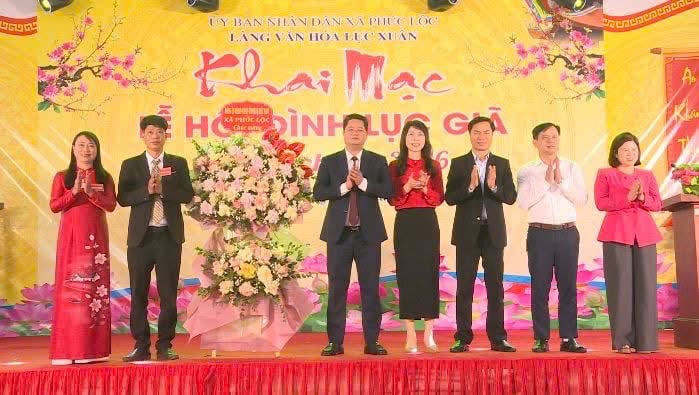
The Luc Xuan traditional festival is a long-standing cultural and folk-belief activity closely tied to the spiritual life of the people of Luc Xuan village, Phuc Loc commune, Hanoi city. According to tradition handed down by generations, the festival dates from around the 17th century. During wartime, the festival was interrupted for a time; after 1975, local people restored it and have maintained it regularly to this day. Every year, the festival is held for three days, from the 11th to the 13th day of the first lunar month, attracting a large number of local villagers, neighboring localities, and visitors from elsewhere.
The festival is associated with the Luc Gia communal house relic and the worship of Tam Bach Hac Tam Giang, whose personal name was Dao Cong Bot, whom the people honored as the village tutelary deity. According to legend, he helped the 18th Hung King defeat the Thuc invaders. During his military campaigns, he came to the Luc Xuan area, established a base, and helped and treated the local people. After he passed away at the confluence of the Bach Hac River, the people, remembering his merits, honored him as the tutelary deity and built a communal house for worship. The relic currently preserves 18 royal edicts from various dynasties, a valuable source of material that helps clarify the local historical, cultural, and belief traditions.
Festival preparations are carried out carefully by the community. Before the festival, the Relic Management Subcommittee coordinates with the party committee, local government, mass organizations, and villagers to establish an Organizing Committee, assign tasks, and clean and decorate the communal house grounds. On the 10th day of the first lunar month, the people plant flags, raise the great flag, and prepare the space for the festival.
The ceremonial part takes place solemnly with traditional rites such as incense offering, worship ceremonies, wine offering, presentation of the oration, burning of the oration, and the concluding ceremony. The worship team consists of 12 people, including the chief officiant, the east chanter, the west chanter, the lantern bearer, assistant officiants, and those in charge of the drum and gong. Elderly men participate in the worship team, while elderly women participate in the incense-offering team. Notably, on the main worship day, the male and female chief officiants of Luc Xuan village and Bao Loc village, together with members of the worship teams of the two villages, take part, demonstrating community cohesion and the spirit of jointly preserving traditional customs.
Besides the ceremonial part, the festive part is organized with many cultural, artistic, and folk-game activities such as tug-of-war, stick pushing, duck catching, and pot hitting, creating a joyful and excited atmosphere during the first days of the new year. The ritual objects and offerings used in the festival include an incense table, palanquin, ceremonial weapons, spirit flags, glutinous rice cakes, flowers and fruit, betel and areca, and votive paper. The worship team wears traditional costumes, in which the chief officiant wears a red robe, while members wear blue robes, hats, and boots. Musical instruments such as drums, horns, flutes, and two-stringed fiddles help create a solemn atmosphere during the ceremonial part and a joyful one during the festive part.
The Luc Xuan festival not only meets the people's cultural and belief needs but also has profound educational significance. This is an occasion for the community to remember and honor the merits of the village tutelary deity, educate the tradition of 'remembering the source of the water when drinking from it,' and strengthen neighborly ties and community solidarity. Through festival activities, customs, rituals, folk games, and stories about the deity worshipped at the relic continue to be passed down to future generations.
Currently, the preservation and teaching of the festival are maintained by the community through direct instruction, oral transmission, and hands-on guidance. Elderly people play an important role in passing on the rituals, customs, and history of the relic to younger generations; at the same time, young and middle-aged people are increasingly encouraged to participate in organizing and practicing the festival. Through this, the Luc Xuan traditional festival continues to be maintained, becoming a cultural beauty of the local community and contributing to preserving and promoting the traditional cultural heritage values of Phuc Loc commune.



