
Traditional festival of Phuc Trach village
5.0Free
5.0Free
Introduction
TRADITIONAL FESTIVAL OF PHUC TRACH COMMUNAL HOUSE
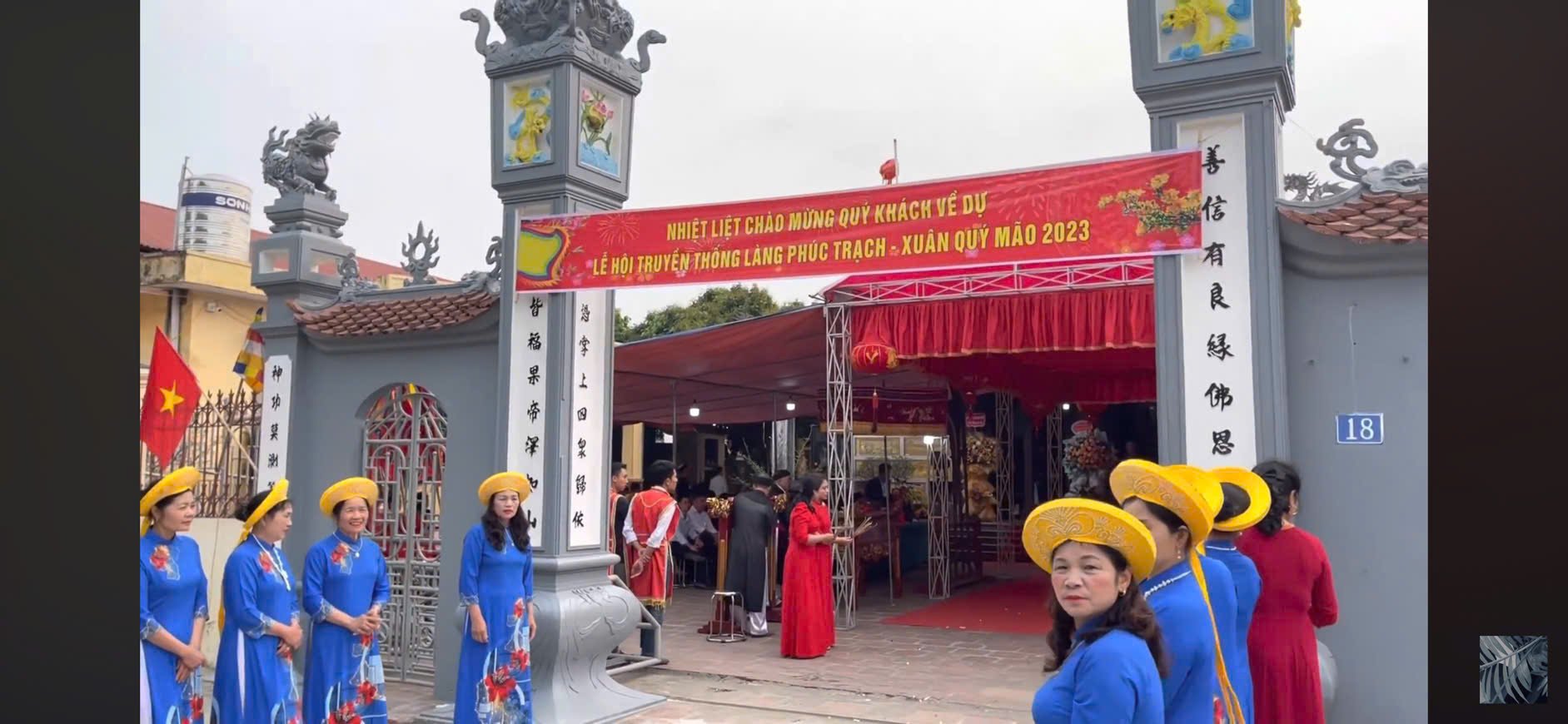
TRADITIONAL FESTIVAL OF PHUC TRACH COMMUNAL HOUSE
Phuc Trach village, Phuc Loc commune, Hanoi city, is a rural area with a long history and cultural depth, where the local community has preserved many long-standing customs, practices and beliefs. The center of the festival is Phuc Trach communal house, where the deity Tho Lenh and Tan Vien Son Thanh are worshipped along with 09 precious royal edicts. The festival takes place over three days from the 11th to the 13th of the second lunar month. Every three years, in the years of the Tiger, Snake, Monkey and Pig, the village organizes the main festival on a large scale with a palanquin procession, while in other years it organizes a customary festival with a procession of offerings and a Council sacrifice. The festival not only carries deep religious meaning but is also an occasion to strengthen family, clan and village community bonds.
Preparation work is carried out very early, starting from the 20th day of the first lunar month with the establishment of the Organizing Committee and the Subcommittee for monument management. From the 7th to the 9th day of the second lunar month, local people clean up and tidy the landscape of the village communal house. By the 10th day, all tasks such as opening the communal house, setting up tents, stacking palanquins, decorating banners and raising the flag are completed. The ritual cleansing of the worship area is also carried out carefully by reputable elders under strict rules on purity, demonstrating solemnity toward the sacred space.
The first day of the festival begins with the sacred Moc Duc ritual to bathe and change the deity's robes with the community's reverence. This is followed by the opening ceremony and the reception of offerings by the chief officiant. At around 2 p.m., the Nhap Tich ceremony takes place, attracting a large number of local people and visitors from afar who bring offerings and burn incense to pray for peace and good luck. In the evening of the same day, the festival space becomes more lively and cohesive with an arts exchange program among generations in the village.
The second day is when the most important rituals of the main festival take place. In the morning, a solemn palanquin procession is held with the participation of drums and gongs, sacred flags, an incense palanquin and a palanquin team made up entirely of young men. In the afternoon, the village communal house continues to welcome many people bringing offerings and taking part in arts exchange and boat-singing activities. The evening is marked by the Chinh Tich sacrifice, performed solemnly, seriously and in accordance with traditional order.
On the morning of the 13th day of the second lunar month, local people continue to receive the offerings of Phuc Loc village and perform the Council sacrifice, followed by a blessing-receiving activity at the communal house at noon to share blessings and strengthen community solidarity. The afternoon is a bustling time for festival activities with rich folk games such as tug of war, stick pushing, duck catching, pot beating and rice-cooking competitions. These activities are not only entertaining but also help improve health and dexterity and attract younger generations to participate in heritage preservation.
During the ritual part, the officiants' costumes strictly follow traditional rules, with red robes for the chief officiant, blue robes for assisting officiants, along with hats and square-toed boots bearing the character Tho. Music in the festival uses an eight-tone ensemble combined with drums and gongs to create a solemn and sacred atmosphere. All rituals, from sacrifices and palanquin processions to incense offerings, contain a system of folk knowledge passed down through many generations.
The festival maintains many strict regulations and taboos to ensure the solemnity of the belief space. According to village custom, people in mourning may not enter the main communal house or take part in serving the festival, the palanquin team must be young men, and those performing the cleansing ritual must be reputable elders from exemplary families. The rear sanctuary area also has strict rules on entry and exit, contributing to maintaining order and the distinctive identity of the festival space.
The community of Phuc Trach village plays the role of the subject deciding the success and endurance of the festival. The harmonious coordination among the Subcommittee for monument management, village leaders, mass organizations, the elderly association and especially young people has created vitality for the heritage. By directly taking part in organizing and practicing rituals, younger generations gradually acquire skills and raise their awareness of responsibility for preserving tradition.
The festival contains many multidimensional values, including religious value expressing reverence for deities, historical and cultural value reflecting local identity, and educational value transmitting the moral tradition of remembering the source when drinking water to younger generations. In addition, the festival has a strong community-cohesion value; it is an occasion for family and neighborhood ties to become closer and a source for those far from home to look back to their roots.
As an important element of intangible cultural heritage, the festival helps preserve many traditional cultural elements, from sacrificial rituals and eight-tone music to folk games and rules of conduct. Maintaining its annual organization helps the heritage remain vivid in real life instead of existing only on paper, while also enriching the local grassroots cultural life.
The transmission of festival skills and rituals is mainly based on oral instruction and hands-on guidance through actual participation. At present, the community has about 80 artisans and experienced people, of whom about 20 directly teach about 40 young learners. This method helps young people observe, learn and practice directly, ensuring the continuity of the heritage across generations.
Festival preservation work is always linked to protecting the architectural space and landscape of Phuc Trach communal house. In addition, the community focuses on strengthening the documentation of the heritage through photographs, audio recordings and written records, while increasing communication and encouraging young people to actively participate in traditional cultural practice activities to raise awareness of heritage protection.
The traditional festival of Phuc Trach village is a highly important cultural and religious activity, bringing together many historical, cultural and spiritual values of the local community. The voluntary and responsible participation of the community is the key that helps the festival maintain its strong vitality. Continuing to preserve, promote and transmit the good values of the festival will contribute to safeguarding community memory and enriching the cultural identity of the Doai region for today and tomorrow.



