
Traditional Festival of Sen Chieu Village
Story
01TRADITIONAL FESTIVAL OF SEN CHIEU VILLAGE
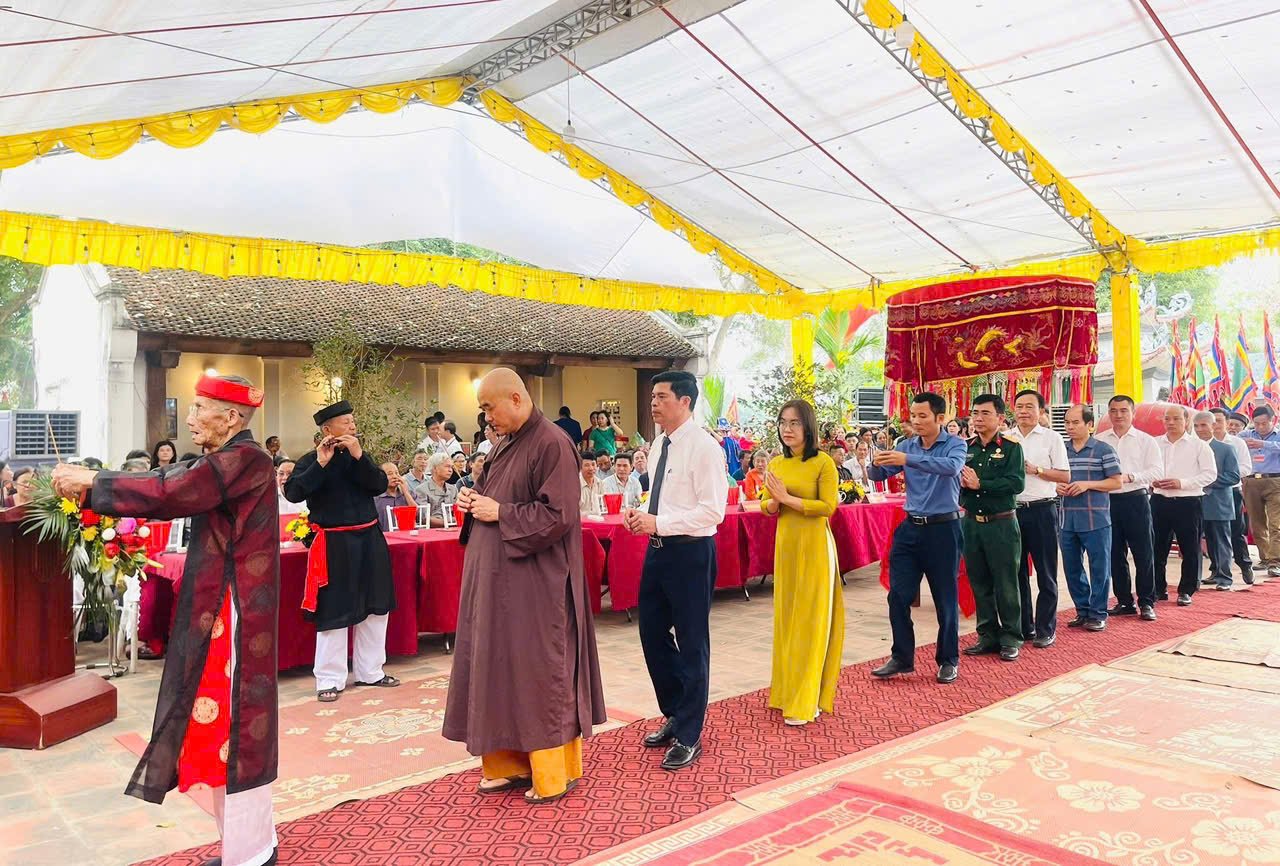
The Traditional Festival of Sen Chieu Village is a folk cultural and religious activity preserved, practiced, and transmitted by the community of Sen Chieu Village, Phuc Loc Commune, Hanoi City, over many generations. The festival is closely associated with the religious space at Ong Temple, Sen Phuong 1 Hamlet, and related cultural sites in the community. It is an occasion for the people to remember and express gratitude to ancestors and deities worshipped by the community, and it is also a common festival day for the villagers, contributing to maintaining customs and practices and strengthening community solidarity.
According to legend and the contents handed down in the deity genealogy, the festival is associated with the story of the deity worshipped by the local people. It is said that He once took part in battles; before going to battle for the second time, the villagers asked for his title to worship him, wishing to remember his merits and pray for his support and protection for the community. After the second military campaign, He stayed in Bac Giang. Since then, the villagers have taken the 10th day of the second lunar month as the main festival day to remember and worship him. This tradition has been preserved, practiced, and passed down to children and grandchildren by generations of local people to this day.
The festival is held annually for 03 days, from the 09th to the 11th day of the second lunar month, with the 10th day of the second lunar month being the main festival day. The rituals are conducted in traditional order, demonstrating the solemnity and reverence of the community. The 09th day of the second lunar month is the day of entering the register, when the Ten Bows ceremony is performed, the communal house is opened, the altars are cleaned, and the Temple is opened. In the afternoon, palanquins are carried to Van Chi to bring the written texts back to the Temple for a reporting ceremony. After the reporting ceremony, the rituals of carrying the written texts and offerings and the Moc Duc bathing ceremony continue; in the evening, rituals of petitioning and changing the deity’s robe are performed.
The morning of the 10th day of the second lunar month is the main festival day. The main palanquins are carried to Van Chi to receive the written texts and the Saint and bring them back for the ceremony. After that, the procession assembles and carries offerings to the Temple to conduct the community offering ceremony. This is an important ritual, with the participation of a large number of local people and those assigned by the community to carry out tasks during the festival. After completing the offering rituals, those responsible perform the ritual of receiving blessed offerings according to traditional custom.
On the 11th day of the second lunar month, the concluding ceremony takes place. At about 11 o'clock, the ritual of removing ceremonial garments is performed, along with ceremonies to collect and store costumes, ritual objects, and palanquins according to traditional regulations. The practice of rituals over the three festival days demonstrates the continuous continuation of religious customs and practices preserved by the community for a long time.
During the organization of the festival, many specific rituals and regulations are handed down and practiced by the community. According to the deity genealogy and the words of the elders, some characters in the deity’s name are written or read in a particular way; during rituals, His name is read softly and one bow is performed. There are also certain taboos regarding offerings, including not using white-colored offerings such as white pigs or white chickens. These regulations are respected and observed by the community to ensure the solemnity and reverence of the traditional rituals.
The festival involves many sectors of the community. In the past, people with seniority, prestige, status, and economic means often played important roles in organizing the festival. Today, the role of organizing and practicing the festival is entrusted by the community to elders, members of the advisory board, people experienced in performing rituals, and strong young men. Selected members carry out suitable tasks such as conducting rituals, carrying palanquins, carrying written texts, preparing offerings, and serving the general activities of the festival.
The traditional ritual objects and items used in the festival include incense altars, palanquins, ceremonial weapons, deity flags, eight treasures, and items serving the rituals. Traditional offerings formerly included a whole pig for sacrifice; nowadays they are prepared in accordance with the community’s conditions, mainly consisting of pig’s head, glutinous rice, fruit, and wine. Festival costumes include ritual garments and ceremonial garments; ritual music includes drums, gongs, and instruments in the bat am ensemble, contributing to the solemn and sacred atmosphere of the ceremonial part.
Besides religious rituals, the festival also includes a festive part with many folk games and rich cultural and artistic activities such as cockfighting, swinging, pot hitting, tug-of-war, blindfolded duck catching, greased pole climbing, and artistic exchange programs. These activities create a joyful and exciting atmosphere, attracting a large number of local people, especially youth and teenagers, thereby creating opportunities for younger generations to access, understand, and participate in the traditional cultural activities of their homeland.
The cultural space of the festival is not limited to Ong Temple but is also linked to the religious and cultural spaces of the residential community in the area. The festival is held at Ong Temple, Sen Phuong 1 Hamlet, Phuc Loc Commune; it is also linked to festival activities of Phuong Do Village and Dong Huynh Village, now belonging to Sen Phuong 6 Hamlet. This relationship shows the exchange and connection between communities sharing a common cultural space and religious tradition.
The Traditional Festival of Sen Chieu Village has important value for the spiritual life of the community. Through the festival, the tradition of remembering the source when drinking water and gratitude to ancestors and deities are expressed and continued. The festival is also an occasion for villagers to return, meet, exchange, and participate together in rituals and community activities, thereby strengthening neighborly ties and enhancing solidarity and bonds between generations.
A prominent value of the festival is its ability to maintain and transmit knowledge and skills of folk cultural practice. Rituals, palanquin processions, written text processions, preparation of offerings, costumes, ritual music, and related customs are mainly taught through oral transmission, hands-on instruction, and direct participation in practice. This is a transmission method that plays an important role in maintaining the continuity of the heritage. At present, the community still has a team of people with experience in practicing and teaching rituals to younger generations.
The current organization of the festival receives the attention and facilitation of local authorities and the consensus and response of the people. Funding for organizing the festival is mainly contributed by the people, together with support from the locality. The community also actively participates in preparing, organizing, and practicing rituals, folk games, and cultural and artistic activities.
To preserve and promote the value of the festival in the coming time, the community recommends continuing to strengthen communication and education for younger generations about the origin, meaning, and value of the festival; encouraging youth and teenagers to participate in festival activities; and paying attention to collecting, recording, and preserving related documents, deity genealogies, customs, and rituals. At the same time, attention should be paid to recognizing, encouraging, and having appropriate policies for artisans, elderly people, and those who play important roles in practicing, transmitting, and protecting the heritage.
With historical, cultural, religious, and community values, the Traditional Festival of Sen Chieu Village is not only a folk religious activity but also a cultural space for the community to express gratitude, maintain customs and practices, transmit folk knowledge, and connect generations. Continuing to preserve, practice, and promote the festival has practical significance in preserving the traditional cultural identity of Sen Chieu Village in particular and Phuc Loc Commune in general.



