
Traditional Festival of Vong Ngoai Village
Story
01TRADITIONAL FESTIVAL OF VONG NGOAI VILLAGE
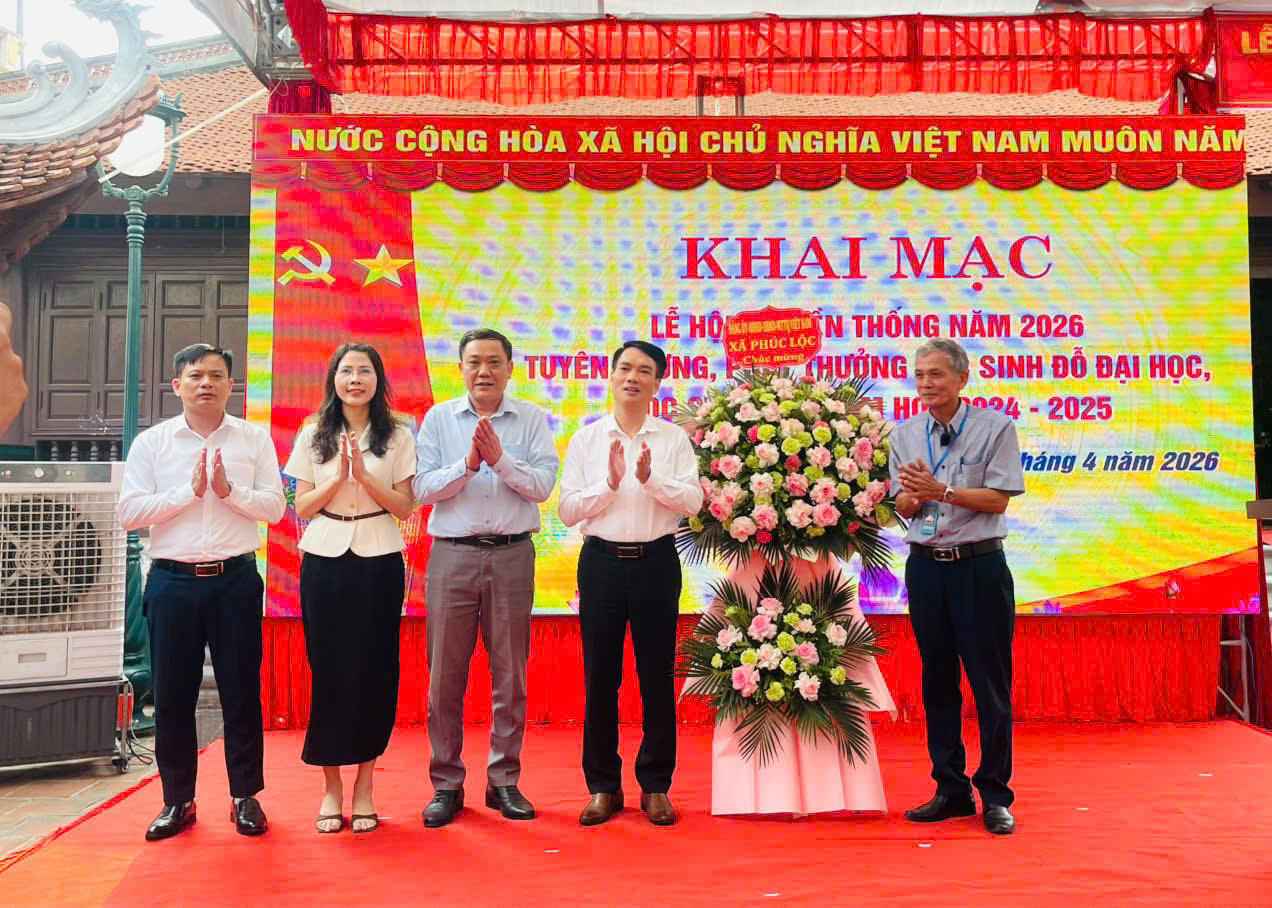
The Traditional Festival of Vong Ngoai Village, Phuc Loc Commune, Hanoi City, is a cultural and folk-belief activity that the local community has preserved and practiced for a long time. According to documents and traditions passed down in the community, the festival has a history dating from around the late 18th century, associated with the village's system of communal houses, shrines, pagodas, and tutelary deity worship. This is an occasion for people to remember and express gratitude for the merits of the deities worshipped, while also demonstrating the moral principle of remembering the source when drinking water and community cohesion.
The festival is held in the village's traditional cultural space, including the communal houses, shrine, and pagoda of Vong Ngoai, in the areas of South Vong Ngoai and North Vong Ngoai, now belonging to Vong Ngoai Hamlet. The deities worshipped and associated with the festival include the three Tutelary Deities Tan Vien Son Thanh at Dinh Thuong and Saint Tam Giang Bach Hai at Dinh Chung. This system of relics forms a sacred space where the community practices traditional rituals and cultural activities over many generations.
The main festival is held over three days, from the 10th to the 12th day of the third lunar month each year. Preparation begins on the 6th day of the third month with the moc duc ceremony, cleaning the deity palanquins and sanitizing ritual objects. On the afternoon of the 9th day of the third month, the ceremony of carrying the Saints from the Shrine to the Communal House takes place. On the morning of the 10th day of the third month, the community holds the nhap tich ceremony, performed by the Tu shrine keeper, to respectfully report and invite the Saints to reside at the communal house, after which the festival is opened.
During the festival days, the ritual part holds the central position with activities such as three rounds of offerings to the Saints, incense offering at the pagoda and memorial house, the Saint procession, and the return-to-palace ceremony. The rituals are performed solemnly with the participation of the ritual team, procession team, elderly people, the relic management subcommittee, and a large number of local people. Offerings and utensils for the rituals include deity thrones, offering trays, wine stands, lamps, candles, fresh flowers, five-fruit trays, oan cakes, glutinous rice, palanquins, sacred flags, bat buu ceremonial weapons, thanh la gongs, drums, chieng gongs, and other traditional items.
Besides the rituals, the festival also includes many cultural, artistic, and folk-game activities such as Thuyen Rong singing, cheo singing on the communal-house mat, cultural exchange, artistic performances, health exercises, and folk games such as pot smashing, greased-pole climbing, sack racing, swing riding, rice-cooking contests, and areca-nut splitting and betel preparation. These activities create a joyful and attractive atmosphere, draw large participation from the people, help maintain community cultural life, and strengthen bonds between generations.
A notable feature of the festival is the direct participation of the community in organizing and practicing it. The festival organizing committee is selected by the community and is responsible for building the program, assigning tasks, and organizing activities. Rituals, ceremonial procedures, and procession and offering skills are taught mainly orally and through hands-on instruction, with elderly people and experienced individuals directly guiding younger generations.
The Traditional Festival of Vong Ngoai Village has important value in history, culture, belief, and community life. The festival contributes to preserving local traditional customs, rituals, and forms of cultural activity; educating younger generations about the homeland's traditions and gratitude to predecessors; and at the same time strengthening neighborly ties, solidarity, and the community's sense of responsibility in protecting the heritage.
Over the course of its existence, the festival has undergone certain changes to suit the community's practical conditions. However, core values such as tutelary deity worship, offerings, processions, incense offering, and folk cultural activities have still been maintained by the community. Continuing to document, audio-record, video-record, transmit to younger generations, protect the relic space, and encourage community participation in practice will contribute to preserving and promoting the value of the Traditional Festival of Vong Ngoai Village in contemporary cultural life.
The festival is not only a traditional belief activity but also a typical community cultural space of Vong Ngoai Village, where the past and present are connected, cultural values are passed down through many generations, contributing to enriching the cultural life of Phuc Loc Commune in particular and the culture of Hanoi Capital in general.



