
Traditional Festival of Võng Nội Village
Introduction
INTRODUCTION TO THE TRADITIONAL FESTIVAL OF VÕNG NỘI VILLAGE
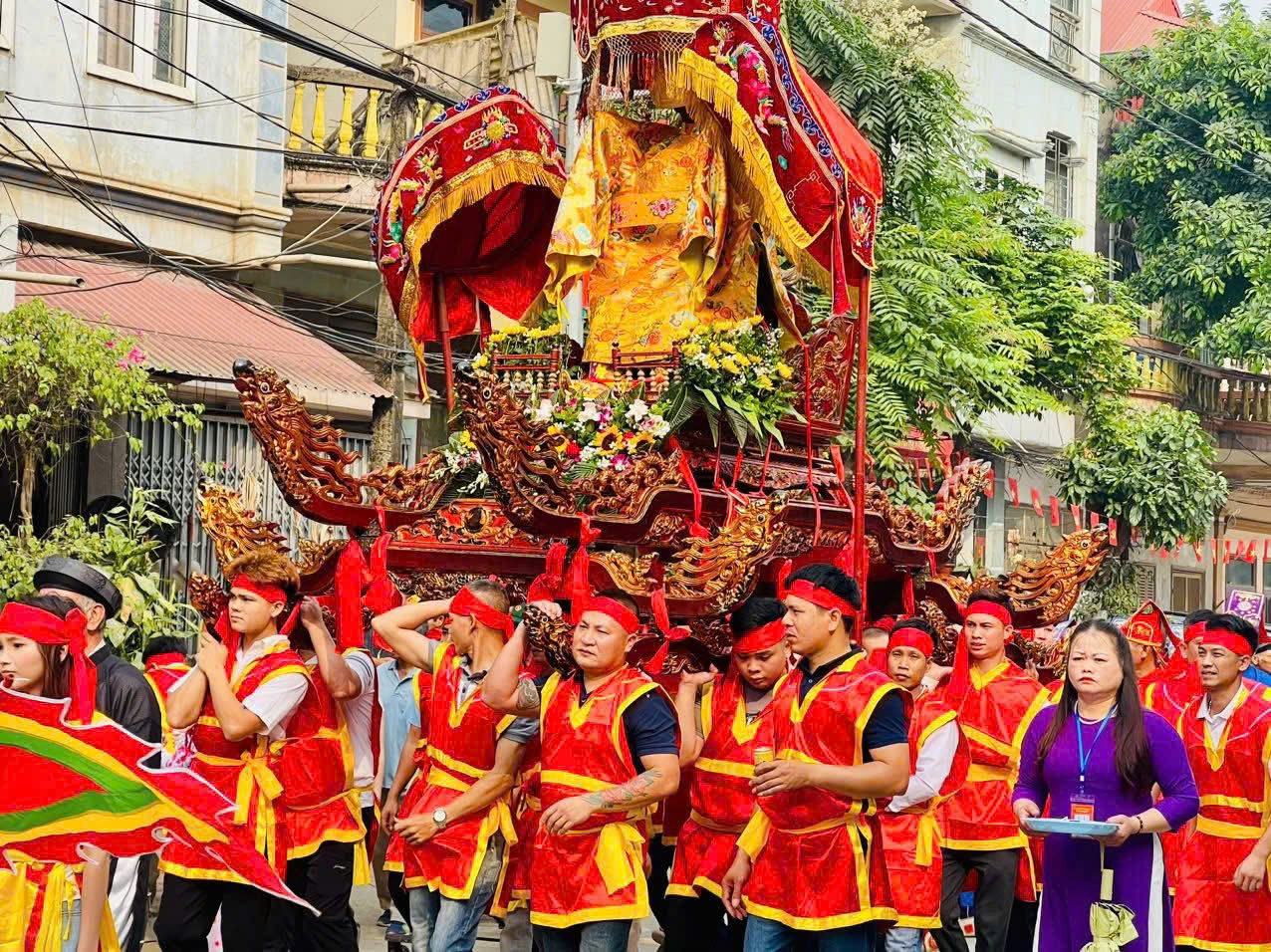
The traditional festival of Võng Nội Village, Phúc Lộc Commune, Hà Nội City, is a traditional cultural and religious activity that has been formed and passed down for a long time in the local community. According to the accounts of the village elders, since they were born and grew up, they have seen the village festival organized, showing that the festival has existed for a long time and is closely connected with the spiritual life of generations of Võng Nội people.
The festival is associated with the worship of the three Tutelary Gods, Tản Viên Sơn Thánh, who are respected and worshipped by the people at Võng Nội Village Communal House. This is an occasion for the community to remember and express gratitude for the merits of the Tutelary Gods, and at the same time to express the principle of 'when drinking water, remember the source' and gratitude to the predecessors who contributed to the community and homeland. The festival space is concentrated at Võng Nội Village Communal House, together with the communal house yard area and community activity spaces around the relic.
Every year, the festival is held in the third lunar month, with preparation and ritual practice activities taking place over many days. Traditionally, the 10th day of the third lunar month is the time for preparing the festival. In the morning, people selected by the community to join the Organizing Committee perform the ceremony of planting the palanquin; in the afternoon, the ritual bathing ceremony is carried out with the participation of the Ritual Subcommittee. The rituals are performed solemnly; participants wear costumes prescribed by traditional ritual and perform prayers according to village customs.
The 12th day of the third lunar month is one of the main days of the festival. The festival opens with an opening speech by the Head of the Organizing Committee, followed by traditional ritual ceremonies performed by the male and female ritual teams. After the rituals, villagers and visitors in turn offer incense, pay tribute, and pray for good things for their families, the community, and the homeland.
On the 12th and 13th days of the third lunar month, traditional ritual ceremonies continue. In addition, villagers and visitors come to attend, make offerings, and offer incense at the communal house. The ritual part is performed solemnly, expressing the community's reverence for the village Tutelary God and the predecessors.
A distinctive feature of the traditional festival of Võng Nội Village is the harmonious combination between the ritual part and the festive part. Alongside the ritual ceremonies, the community organizes many folk games and cultural and artistic activities to create a joyful and enthusiastic atmosphere during the festival days. Games such as tug-of-war, competitive cooking, catching eels in jars, catching ducks in water, catching goats on land, and blindfolded pot hitting... attract a large number of people to participate and cheer. In the evening, cultural and artistic programs are organized with the participation of art teams and individuals from the village and neighboring localities. This is not only entertainment but also contributes to strengthening exchanges, community cohesion, and solidarity among villages and residential areas.
In the process of practicing the festival, the Võng Nội village community always pays attention to selecting reputable, dedicated people with good moral qualities and trusted by the people to participate in the boards and sections serving the festival. In particular, the person selected by the community as the chief ritual officiant must be a member of the Elderly Association, not in mourning, and must meet the traditional requirements of the community. These regulations show respect for the solemnity and reverence of the rituals and contribute to maintaining the cultural identity of the festival.
Previously, the Võng Nội village festival was also associated with the village shrine space. According to the memories of older generations, during the festival days there was a ritual of procession from the communal house to the shrine, then a procession back to the communal house to perform rituals; on the last day of the festival, there was again a procession back to the shrine. However, the shrine no longer exists today, so the rituals of procession to the shrine and from the shrine back to the communal house are no longer performed as before. This is one of the changes in the festival through history, while the rituals, incense offerings, and community cultural activities are basically still maintained by the people.
The traditional festival of Võng Nội Village has important value for the cultural and spiritual life of the local community. Through the festival, generations of people have the opportunity to meet, interact, and participate together in common village activities, thereby strengthening neighborly ties and the spirit of community solidarity. The festival is also an environment in which moral values, customs, practices, traditional rituals, and good behavioral norms are transmitted from one generation to the next.
The practice of the festival also contributes to educating younger generations about the history and cultural traditions of the homeland, helping them better understand their roots and the merits of the Tutelary God and predecessors. Folk games, artistic activities, and traditional rituals organized in the festival create conditions for people, especially young people, to directly participate in and receive the cultural values of the community.
Currently, the organization and maintenance of the festival are carried out by the Relic Management Subcommittee in coordination with the Elderly Association, branches, youth unions, and mass organizations in the village. Many people in the community participate in work such as rituals, decorations, organizing folk games, art performances, ensuring security, and activities serving the festival. Assigning responsibility to each section helps the festival be organized in an orderly and solemn manner, while promoting the community's role as subject in protecting and practicing the heritage.
One of the important factors helping the festival be maintained is the transmission of rituals and practice skills to later generations. Ritual texts, ways of performing rituals, and traditional rules are mainly transmitted through oral methods, direct guidance, and 'hand-on' instruction. Elders and experienced people in the Ritual Team and the Relic Management Subcommittee play an important role in guiding younger people to approach and practice traditional rituals.
In present life, the traditional festival of Võng Nội Village is still regularly maintained by the community and does not face a clear risk of fading. However, some elements of the traditional festival have changed according to practical conditions, especially the practice space because the village shrine no longer exists. Therefore, documenting the rituals, recording audio and video, collecting prayers and ritual texts, and the memories of elders is necessary to contribute to preserving more fully the values of the festival.
It can be affirmed that the traditional festival of Võng Nội Village is an important part of the cultural life of the local community. The festival not only meets religious and spiritual needs but is also a cultural space for the community to meet, interact, have fun, and practice traditional values together. Over time, the festival has become a cultural symbol associated with the communal house, the community, and the memories of many generations of Võng Nội people.
In the coming time, continuing to maintain the organization of the festival according to tradition, while strengthening communication, documentation, transmission to younger generations, and protection of the communal house relic space will contribute to preserving and promoting the values of the festival. Through this, the traditional festival of Võng Nội Village will continue to be preserved as a beautiful cultural feature of the locality, contributing to building grassroots cultural life and preserving the traditional cultural identity of the community in the current development process.



