
Ban Shrine
Introduction
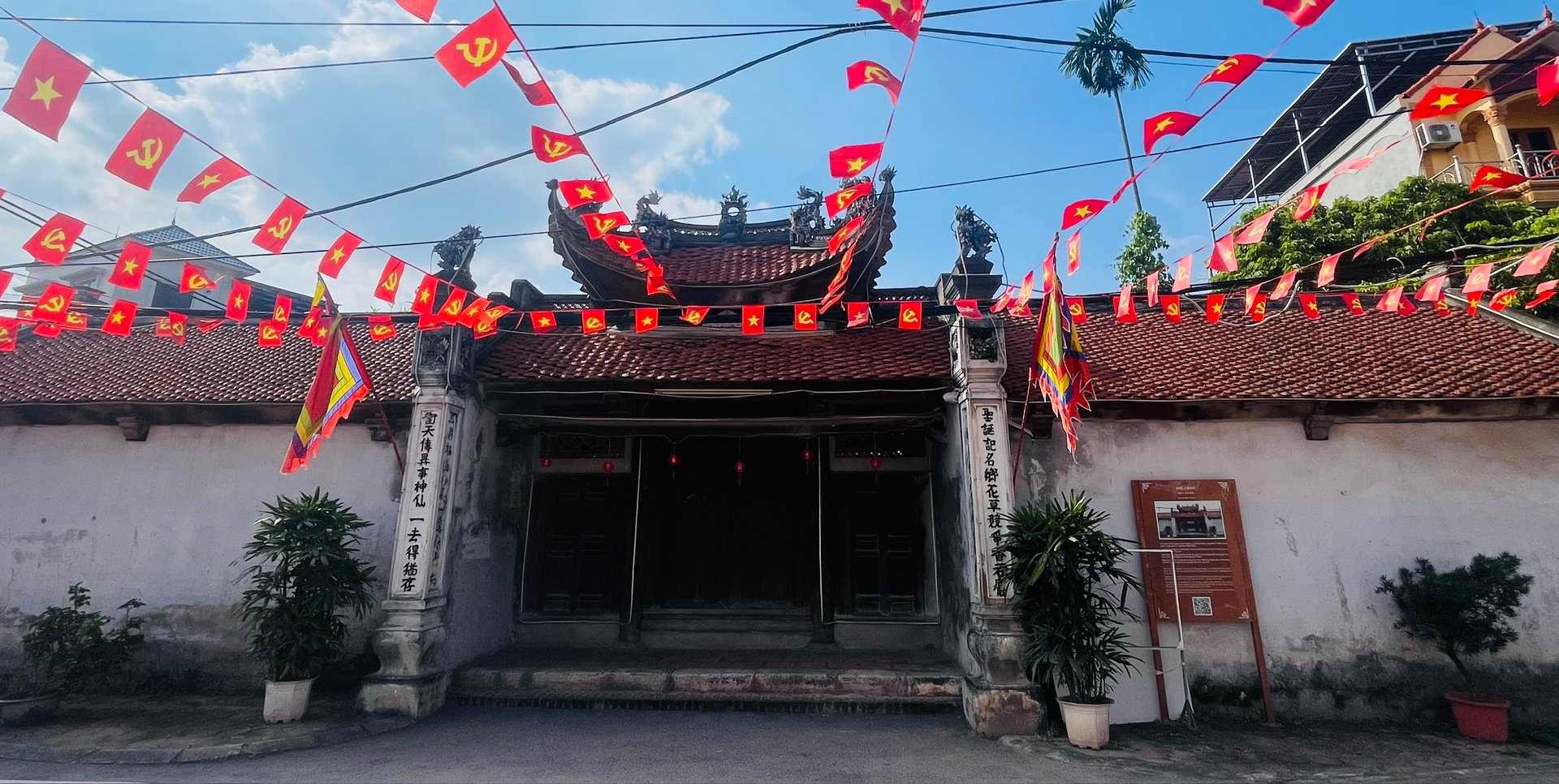
Ban Shrine is located west of the Upper Temple, in the middle of Ban hamlet, covering 814 m2. Its Sino-Vietnamese name is “Dục Linh Từ”, and it worships the Holy Mother.
Legend says this is where the Mother gave birth to Gióng; it was originally part of Trại Nòn forest, so its ancient name was “Trại Nòn Shrine”. The shrine was restored in the 19th century and roofed with old-style tiles shaped like shoe toes. Behind the shrine is Bát Nhũ Pond (the pond of eight breasts); in the middle of the pond rises a small, flat mound. Legend says this is where Gióng was born, had his umbilical cord cut with a stone sickle, was bathed in a stone basin, and lay on a stone bed. Today, only the stone basin remains here, displayed in front of the altar with an incense bowl dedicated to Saint Gióng.
At the annual Gióng Festival, on the afternoon of the 7th day of the 4th lunar month, the festival procession passes through Ban Shrine. Here, the Hiệu officiants perform a ritual of homage to the Holy Mother before setting out on the “route inspection” - the first day of the festival. They pray that the Holy Mother will shelter and protect the following festival days, the 8th and 9th days of the 4th lunar month, so that they may be successful and auspicious.
Ban Shrine is a relic within the Phù Đổng Temple Relic Site, which was ranked as a special national relic by the Prime Minister in 2013.



