
Mieu Nha Shrine
Good to know
- You should arrive early for an open and airy experience
- Free
- Convenient access by taxi or bus.
Introduction
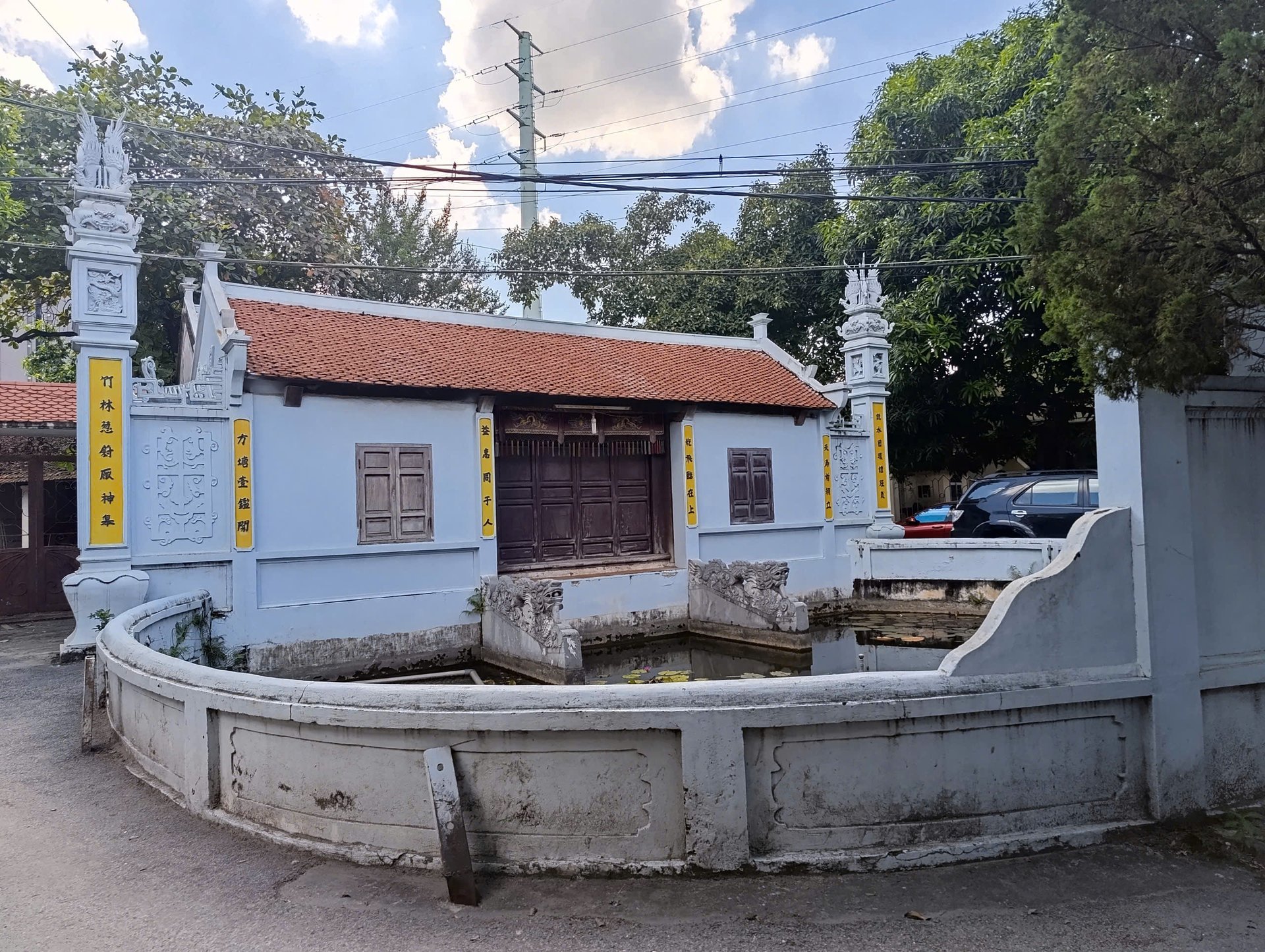
Mieu Nha Shrine in Mieu Nha village, whose demotic name is Ke Nga, now part of Xuan Phuong Ward, Hanoi. Previously, this area belonged to Tay Mo, Tu Liem District. The shrine is more than 200 meters from Mieu Nha Communal House and together with it forms a cluster of relics closely tied to the religious life of the local community.
Compared with the communal house, Mieu Nha Shrine was built later. Existing documents indicate that the structure was established around the early 20th century. Although it is not large in scale or elaborate in architecture, the shrine plays an important role in the village's worship system, especially in rituals related to Ly Nam De, the tutelary deity revered by the people of Mieu Nha.
In local tradition, the communal house and shrine do not exist separately. During the January festival, the saint's procession moves between these two spaces, making Mieu Nha Shrine an important point on the community's ritual route.
The shrine's value also lies within the overall heritage of Mieu Nha Communal House and Shrine. The relic cluster preserves many valuable materials related to the worship of Ly Nam De, such as stone steles, royal edicts, genealogical records, and ritual objects. These materials help reflect the long history of worship in Ke Nga village.
On January 21, 1989, Mieu Nha Communal House and Shrine was recognized by the Ministry of Culture and Information as National-level historical-cultural relic.
Today, Mieu Nha Shrine still serves as an important religious space, connecting architecture, rituals, and community memory of Ly Nam De in the cultural life of Mieu Nha village.
Mieu Nha Shrine is relatively small in scale, with much simpler architecture than Mieu Nha Communal House. The structure is arranged on a plan the character Nhi, consisting of two parallel buildings: Tien Te and Hau Cung.
In front of the shrine there is a semi-circular pond, creating open space and helping soften the landscape of the worship area. Surrounding the shrine is a stone wall system that clearly defines the sacred space from the residential area outside.
Tien Te consists of three bays, where incense-offering rituals are performed and sacrifices are prepared. Behind it is the three-bay Hau Cung, which is more sacred and houses the main altars. The shrine's architecture is not notable for complex carvings but mainly has a rustic appearance, suited to the function of a small-scale worship structure.
Inside the shrine are placed a dragon throne, spirit tablets, and some ritual vessels used for worshipping Ly Nam De and related deities.
Notable artifacts such as the Chinh Hoa stele of 1682, 27 royal edicts, the Ngoc Pha of Ly Nam De, a bat cong palanquin, two long dinh palanquins, a pair of wooden horses, horizontal plaques, scrolls, and couplets belong to the overall Mieu Nha Communal House and Shrine complex, most of which are preserved in the communal house area.
The distinctive value of Mieu Nha Shrine lies in its role in ritual space. The shrine is a destination in the saint's processions, directly connected with Mieu Nha Communal House and forming a complete religious whole for Ke Nga village.
More Other places
- Other placesVerified
Gioi Duc Pagoda (Hong An Temple)
Ung Hoa Commune
5.0Free  Other placesVerified
Hai Giac Pagoda
O Dien Commune
5.0Free Other placesVerified
Phuong Bang Pagoda (Hung Long)
Son Dong Commune
5.0Free Other placesVerified
Sung An Pagoda, also known as Sung Khang Pagoda (Dong Ba Pagoda)
Thượng Cát Ward
5.0Free
