
Ngoc Mach Shrine
Good to know
- You should arrive early for an open and airy experience
- Free
- Convenient access by taxi or bus.
Introduction
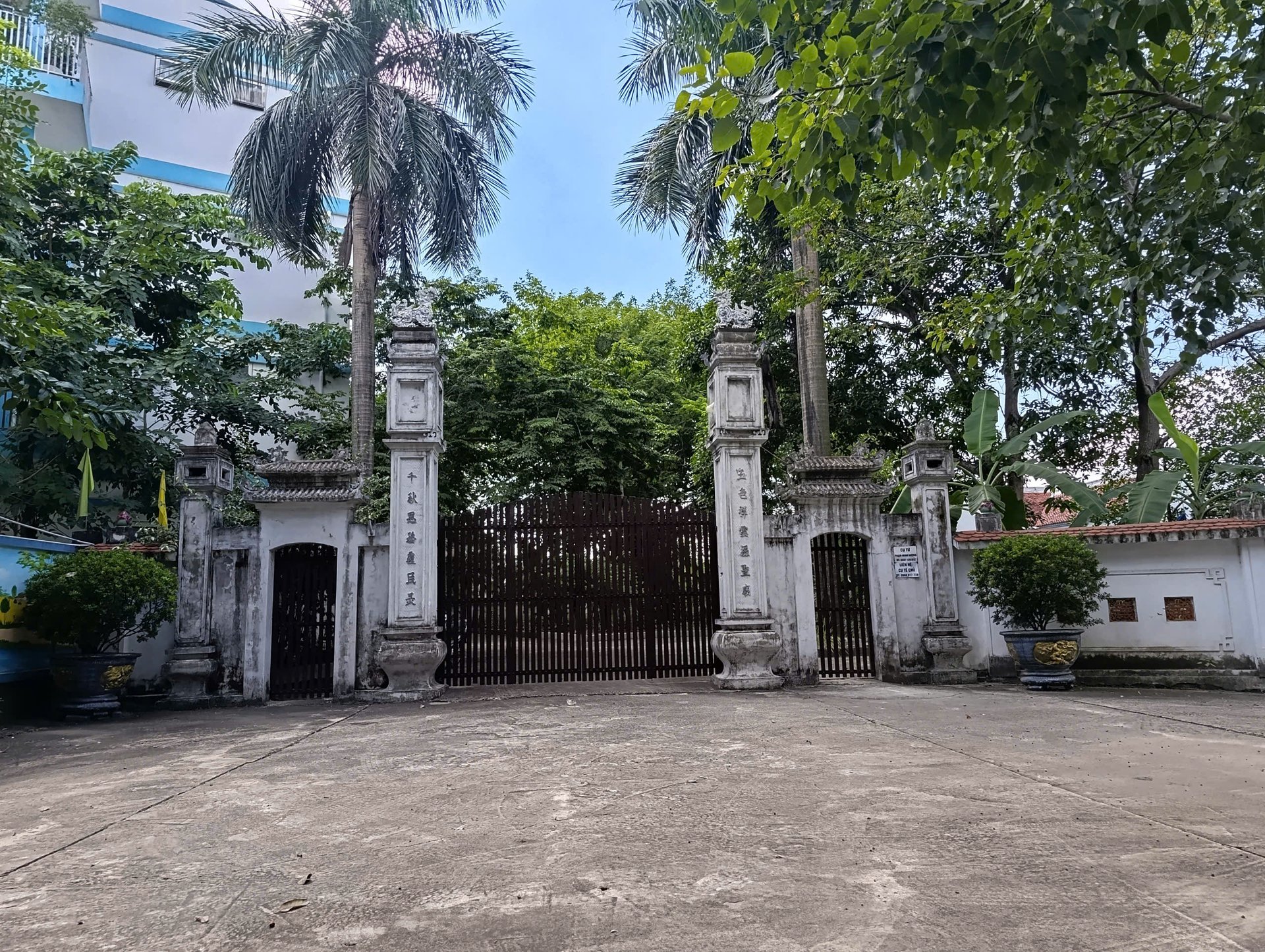
Ngoc Mach is an ancient village in the western area of Hanoi, where many stories connected with the period of nation-building and defense have long been handed down. In folk memory, this land was once associated with the legend of Phan Tay Nhac from the Hung Vuong era, and then in the 6th century it was linked to the upheavals of the Van Xuan period and the struggle against northern domination.
Ngoc Mach Shrine worships Ly Nha Lang, also known as Ly Lang, who according to local hagiographic tradition was the son of Ly Phat Tu – Hau Ly Nam De.
According to legend, Ly Nha Lang's mother was from Chau Chang. Before giving birth to him, she dreamed that she swallowed a white pearl. When he grew up, Ly Nha Lang was described as a man of strong physique, with intelligence and courage surpassing others, and he soon joined military affairs.
The context at that time was a period when power in Van Xuan underwent many upheavals. After Ly Nam De handed military authority to Trieu Quang Phuc, Trieu Quang Phuc drove out the Liang army and proclaimed himself Trieu Viet Vuong. Meanwhile, the Ly clan's forces, continued by Ly Phat Tu, still harbored the intention of restoring their cause.
The hagiography recounts that Ly Nha Lang was appointed vanguard general and led troops into battle with Trieu Viet Vuong. After many battles without victory or defeat, the two sides temporarily made peace and took the Quan Than Beach area as the boundary.
A famous layer of legend recounts that Ly Nha Lang later married Cao Nuong, the daughter of Trieu Viet Vuong. Thanks to this marriage, he learned the secret of a sacred object called dragon's claw, believed to be the source of power that helped Trieu Viet Vuong win. Ly Nha Lang secretly swapped the sacred object and sent it back to his father. After that, Ly Phat Tu led troops to attack and regained control of the country.
In his later years, the hagiography says Ly Nha Lang returned to his mother's homeland and changed his surname from Ly to La. One day, while bathing at the river landing, he caught a green fish; when he cut it open, he found a divine saber. From then on, he was said to have the ability to transform in extraordinary ways.
On the day 18th day of the tenth lunar month, Ly Nha Lang and his mother went to a large mound area. While the sky was clear, a white cloud appeared, and then both suddenly disappeared. Folk believed that he had become a deity and appeared many times, so a place of worship was established.
According to the hagiography, in the reign of Le Dai Hanh, he continued to be granted honorific titles and was honored as Superior Deity. From then on, the worship of Ly Nha Lang was maintained through many generations.
The above stories belong to the realm of hagiography and folk legend. But it is precisely through those layers of legend that the people of Ngoc Mach have preserved the image of Ly Nha Lang as a patron deity, tied to the memory of the Van Xuan period and the long history of the Ke Ngoc land.
On March 29, 2019, the Hanoi City People's Committee issued Decision No. 1493/QD-UBND, ranking Ngoc Mach Shrine, Xuan Phuong Ward as a city-level relic.
More Other places
- Other placesVerified
Gioi Duc Pagoda (Hong An Temple)
Ung Hoa Commune
5.0Free  Other placesVerified
Hai Giac Pagoda
O Dien Commune
5.0Free Other placesVerified
Phuong Bang Pagoda (Hung Long)
Son Dong Commune
5.0Free Other placesVerified
Sung An Pagoda, also known as Sung Khang Pagoda (Dong Ba Pagoda)
Thượng Cát Ward
5.0Free
