
NGUYEN THUC ANCESTRAL TEMPLE
5.0Free
5.0Free
Introduction
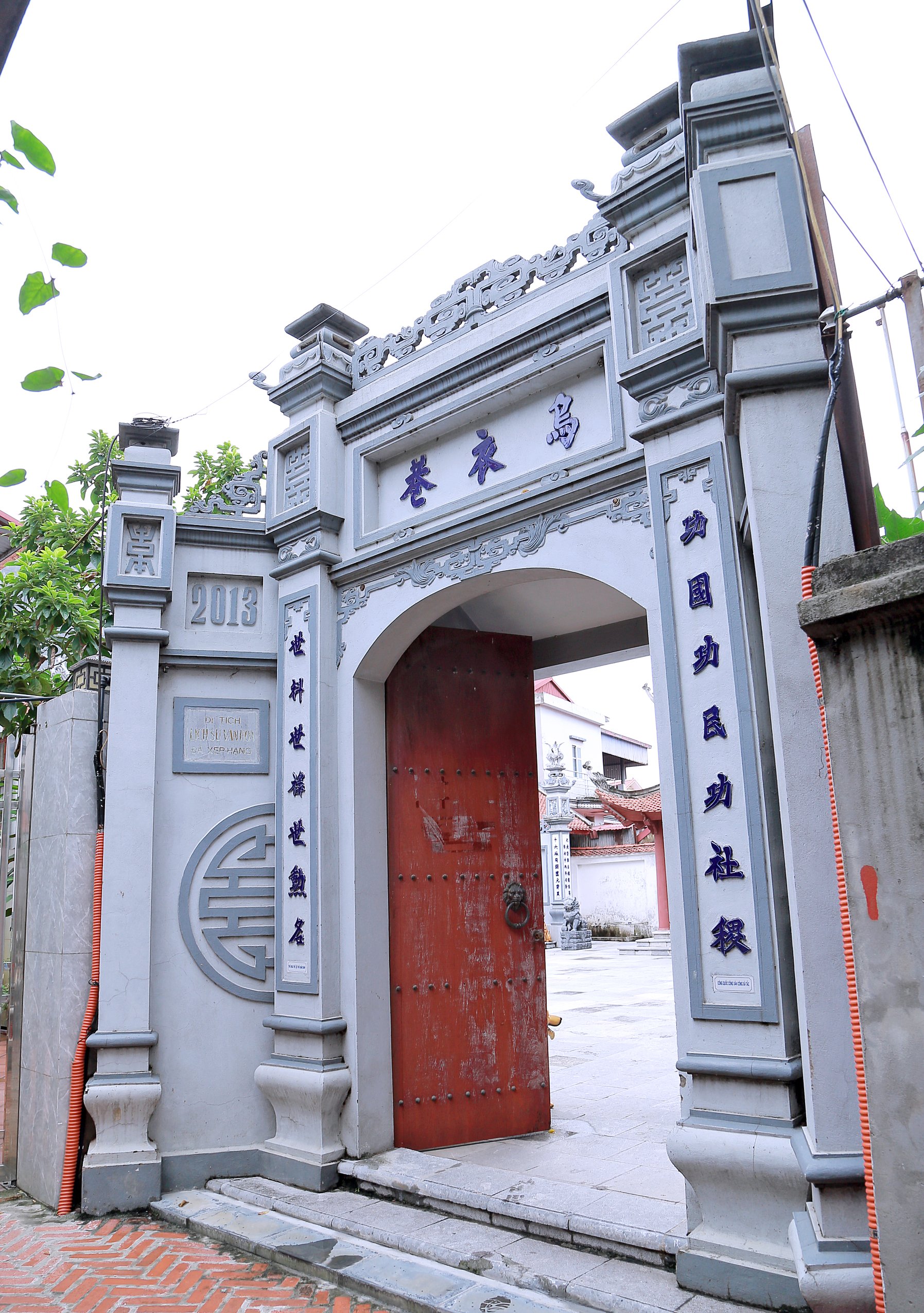
Location: Van Diem Village, Thu Lam Commune, Hanoi City.
The Nguyen Thuc (That) clan ancestral temple is a memorial relic of a historical notable, associated with the life and career of Mr. Nguyen Thuc – a notable remembered and worshipped by the clan and the people of Van Diem. According to the relic's profile, the name Nguyen Thuc (That) originates from Chinese characters, which can be pronounced Thuc or That. The relic was ranked as a National relic under Decision No. 57 VH/QD dated January 18, 1993.
Imprint of homeland and clan
Van Diem in the past had the vernacular name Dom, formed around the 14th century. According to documents in the file, the formation and migration of people here are associated with historical upheavals of feudal dynasties. The Nguyen clan in Van Diem has a long history, with many successive generations living and some passing exams and becoming mandarins, contributing to the clan's tradition of studiousness.
The temple was built on the very land associated with Mr. Nguyen Thuc's homeland. After he passed away, the clan established the temple to worship him; Mr. Nguyen Thuc is worshipped in the central bay, while the two side bays worship subsequent ancestral generations. Over time, the temple has become a place where descendants in the clan remember their ancestors, return to their roots, and preserve the fine traditions transmitted through many generations.
Mr. Nguyen Thuc is the central figure of the relic. The file records that he passed the doctoral examination in the Ky Mui examination in 1619 and went through a process of serving as an official, undertaking many important responsibilities in the royal court. In 1621, he was specially promoted to Dong Cac Dai Hoc Si; in 1623, he was granted the title Thieu Bao and held the position of Minister of Rites. In 1676, he asked to retire to his homeland. After returning to Van Diem, he continued to open classes and had many successful students.
A notable point in the documents about Mr. Nguyen Thuc is the image of an official who valued purity, integrity, and responsibility to the state. The file records that he once impeached corrupt officials; when he returned to his homeland, he contributed land granted to him as public land and reduced various taxes and levies for the people. He also participated in building Me Village communal house and Co Chau Village literary shrine. These actions contributed to the image of an official responsible to the community and respected by the people.
Mr. Nguyen Thuc also left his mark in literature. The file states that he wrote poetry, some works were lost; later Le Quy Don collected 12 poems and recorded them in Toan Viet Thi Luc. The poems introduced in the file show his affection for his homeland, family, and simple life.
Mr. Nguyen Thuc died in his homeland Van Diem in the Dinh Suu year 1637. The file records that the royal court posthumously bestowed on him the title Thai Te, gave him the posthumous name Trung Thuan, and held his funeral at the level of a national funeral. After he passed away, the villagers of Van Diem maintained ritual offerings at the temple at the beginning of spring before going to the communal house to worship the deity.
The Nguyen Thuc clan ancestral temple was built around the first half of the 17th century. The file states that previously the structure had two buildings arranged in the shape of the character Nhi. In 1862, the temple and the village were burned and destroyed. In the period 1987–1990, the relic was repaired in items such as re-tiling to prevent leaks, paving the floor and yard, and repairing the gate and doors. The file also records that the relic has been restored and upgraded spaciously, additional altar objects were added, and a stele house was built to the left of the temple to preserve stone steles.
The temple is located in an enclosed compound, on high and flat land in the middle of the village; according to the file, the construction and use area is 411m². Outside is a brick gate plastered with lime, about 2m wide and 3.5m high. On top of the gate are decorative seal-script characters and a row of Chinese characters “O y hang”. Through the gate is a brick-paved yard, divided into a use area and a landscape area; in the middle of the yard is a four-sided stele recording the clan's history.
The temple architecture has traditional features with a gable end with blocked sides and hand-shaped brackets, roofed with local tiles. The truss system uses the thuong gia chieng, ha ke truyen style. The wooden components are elaborately processed and decorated; the gia chieng part has carved lines and the character Tho, the chieng posts are shaped like nghe creatures, while the ke truyen part is shaped like dragons with their tails linked.
The temple currently preserves many worship objects and artifacts of historical and artistic value. Notable is the altar in the central bay, with artistic dating to the 19th century, carved with themes of the four sacred animals, four precious plants, and flowers and leaves; prominent in the central panel is the image of a turtle spraying water and a phoenix head placed on a tiger-mask motif. The temple also has eight worship thrones carved with images of dragons, phoenixes, tiger masks, long ma, along with themes of the four sacred animals, four precious plants, and flowers and leaves.
The system of horizontal plaques and couplets is also a notable part of the relic. Four horizontal plaques in the worship bays bear contents such as “Van co son ha”, “Toc tuong dai”, “The huu hung”, “Bat hien dioc the”, expressing remembrance of ancestral generations and the desire for the clan's traditions to continue. The temple also preserves 22 couplets lacquered in red and gilded with gold, dating from the 19th and 20th centuries, praising the merits of the ancestors and the pride of the Nguyen clan.
In particular, the relic has stone steles recording the clan's history. Among them is a four-sided stele placed in front of the temple, about 1.8m high including the base, 0.6m on each side, decorated with images of dragons facing the moon and flowers and leaves. The stele's content in Chinese characters records 13 successive generations of the clan, along with contents praising the tradition of loyalty and filial piety, the merits of ancestors, and the continuation of generations. The file also records a stele at Van Diem Village communal house engraved with the achievements of Mr. Nguyen Thuc and a stele at the Temple of Literature Quoc Tu Giam bearing the name of Mr. Nguyen Thuc – Nguyen Nghi.
The outstanding value of the Nguyen Thuc clan ancestral temple first lies in its historical value associated with the life and career of Mr. Nguyen Thuc. The relic also reflects the tradition of studiousness, the spirit of responsibility to the community, and the qualities preserved by the clan through many generations.
According to the file, from Mr. Nguyen Thuc as the first ancestor, later generations continued to have many people pass examinations and work in many fields. The second ancestor is Nguyen Nghi – Mr. Nguyen Thuc's son – who also passed the doctoral examination and was appointed in the royal court. Later generations include Nguyen Khue, Nguyen Si, Nguyen Tham, Nguyen Thuong, Nguyen Tu Giai, Nguyen Huu Khoan... Those traditions continue to be valued by the clan in present-day life.
The temple is therefore not only a place to commemorate a notable but also a place preserving the memory of a clan, a homeland, and the tradition of learning and ethics of generations. The file identifies the Nguyen Thuc clan ancestral temple as a type of memorial relic of a historical notable.
Today, the temple continues to be a gathering place for Nguyen descendants from many places to return, together remember their ancestors, visit, connect, and remind generations of their roots. With its traditional architectural system, many worship objects, stone steles, couplets, horizontal plaques, and documents related to the clan, the Nguyen Thuc clan ancestral temple is a valuable address for learning about the history, culture, and traditions of the Van Diem land.



